
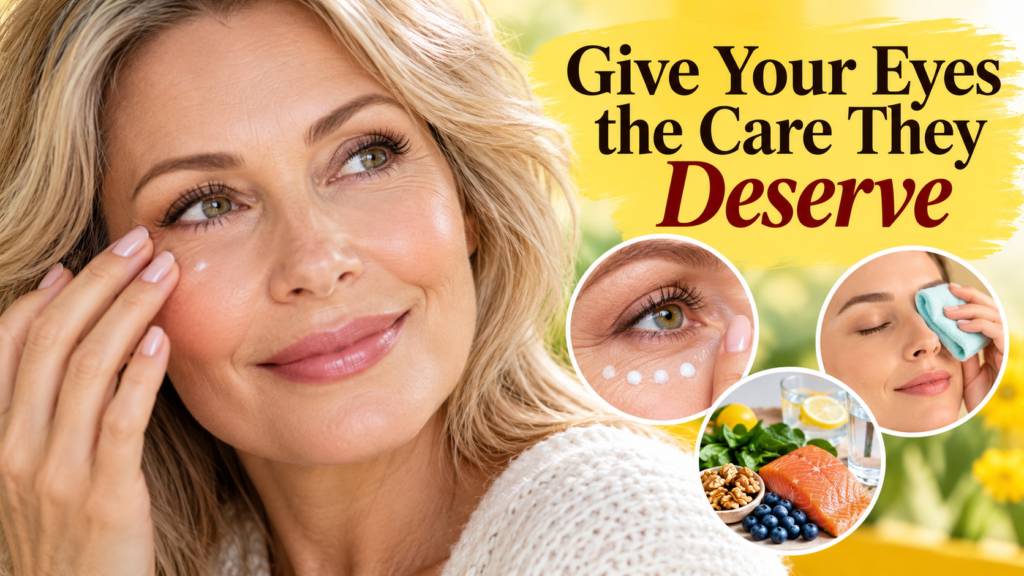
The skin around your eyes can be one of the first places to show signs of aging. You may notice that your eyes look more tired than they used to, dark circles seem harder to disguise, puffiness lingers longer, or fine lines appear even when you feel well rested.
There is a reason this area needs extra attention. The skin around the eyes is delicate, and over time it can become thinner, drier, and less elastic. Changes in collagen, hydration, sleep, sun exposure, and everyday habits can all contribute to an older or more fatigued appearance.
The good news is that caring for the eye area does not have to involve an overly complicated routine. A few consistent habits can help support healthier-looking skin as you age.
1. Keep The Skin Around Your Eyes Hydrated
Dry skin can make fine lines appear more noticeable. As we get older, the skin can also become less effective at retaining moisture, which may leave the eye area looking dull or creased.
A gentle moisturizer or eye-area product can help maintain the skin’s moisture barrier. Apply products carefully rather than rubbing them into the delicate skin.
Hydration is also about your everyday habits. Drinking enough fluids and maintaining a balanced diet can support overall skin health, although hydration alone cannot reverse normal aging.
2. Protect Your Eyes From the Sun
Sun exposure is one of the most important environmental factors affecting visible skin aging.
Repeated exposure to ultraviolet radiation can contribute to changes in collagen and elastin, uneven pigmentation, dryness, and the development of fine lines. The skin around your eyes is particularly vulnerable because it is thin and frequently exposed.
Consider making sun protection part of your daily routine:
- Wear sunglasses that provide UV protection.
- Use broad-spectrum sunscreen as appropriate for your skin.
- Seek shade during periods of strong sunlight.
- Remember that sun protection matters even when the weather does not feel especially hot.
Consistent protection can be more valuable than relying on occasional intensive skincare treatments.
3. Be Gentle When Removing Makeup
The skin around the eyes does not respond well to unnecessary pulling or vigorous rubbing.
If you wear mascara, eyeliner, or other eye makeup, use a gentle removal method. Allow the remover to loosen the makeup before wiping rather than repeatedly rubbing the skin.
Being gentle can also help prevent unnecessary irritation, particularly if your skin has become more sensitive or dry with age.
4. Pay Attention To Sleep And Daily Habits
Sometimes tired-looking eyes are not simply an issue of skincare.
Lack of sleep can make the area beneath the eyes appear darker or puffier. Stress, long periods of screen use, dehydration, and lifestyle habits can also contribute to an overall tired appearance.
Try to establish habits that support your skin and general well-being:
- Aim for a consistent sleep schedule.
- Take regular breaks from screens.
- Eat a varied, nutrient-rich diet.
- Stay adequately hydrated.
- Avoid smoking, which can accelerate visible skin aging.
These habits will not stop the natural aging process, but they can form an important foundation for maintaining healthier-looking skin.
5. Understand Why Collagen Matters
Collagen is a structural protein that helps provide skin with strength and support. As part of the natural aging process, the body’s collagen production gradually changes.
This can contribute to reduced firmness and elasticity and make fine lines and wrinkles more visible. The effects can be especially noticeable around the eyes because the skin there is already delicate.
Skincare cannot completely prevent age-related collagen changes. However, protecting your skin from excessive sun exposure, maintaining good lifestyle habits, and taking a consistent approach to skincare can help support the appearance and condition of aging skin.

6. Don’t Ignore Puffiness and Dark Circles
Dark circles and puffiness can have many different causes, which means there is no single solution that works for everyone.
Genetics, pigmentation, shadows caused by facial structure, allergies, sleep, dehydration, and age-related changes can all play a role.
For temporary puffiness, some people find that a cool compress and adequate rest can make the area look fresher. Avoiding excessive rubbing is also important.
If dark circles have gradually become more noticeable with age, remember that they are not necessarily a sign that your skin is unhealthy. Changes in skin thickness and the way light reflects from the area can affect its appearance.
7. Consider Collagen Support As Part Of Your Beauty Routine
If your goal is to care for aging skin from a broader perspective, you may also consider nutritional approaches alongside your normal skincare routine.
Kollagen Intensiv is one option people may choose to incorporate into a beauty routine focused on supporting the appearance of aging skin. Its collagen-focused approach makes it relevant for people who are interested in maintaining skin firmness, hydration, and a youthful-looking appearance as part of an overall skincare strategy.
It is important to keep expectations realistic. A collagen supplement or beauty product is not a replacement for sunscreen, good nutrition, adequate sleep, or a consistent skincare routine. Individual responses can also vary.
For someone already paying attention to hydration, sun protection, nutrition, and daily skincare, collagen supplementation may be something worth considering as one additional part of that routine.

8. Give Your Routine Time to Work
One of the easiest mistakes to make with skincare is constantly changing products before giving a routine enough time.
Healthy-looking skin is usually the result of consistent habits rather than one dramatic change. Focus on protecting the delicate eye area, keeping it comfortable and hydrated, getting adequate rest, and avoiding unnecessary irritation.
It can also help to evaluate your skin realistically. Fine lines, changes in elasticity, and some degree of dryness are normal parts of aging. The goal does not have to be eliminating every sign of age.
Instead, focus on keeping your skin looking cared for, hydrated, and healthy.
Caring for Aging Skin Around Your Eyes
The appearance of your eyes can change considerably as you get older, but that does not mean you need an elaborate routine to care for them.
Sun protection, gentle skincare, hydration, sufficient sleep, good nutrition, and healthy lifestyle habits all have a role to play. Understanding the effects of collagen loss and reduced elasticity can also help you choose a more realistic approach to aging skin.
If dark circles, puffiness, fine lines, or tired-looking eyes are becoming more noticeable, start with the basics and build from there. Consistent care can help you maintain healthier-looking skin while allowing the natural aging process to happen without unrealistic expectations.
Want more tips for younger-looking eyes? Subscribe for simple eye-care advice
delivered to your inbox.