
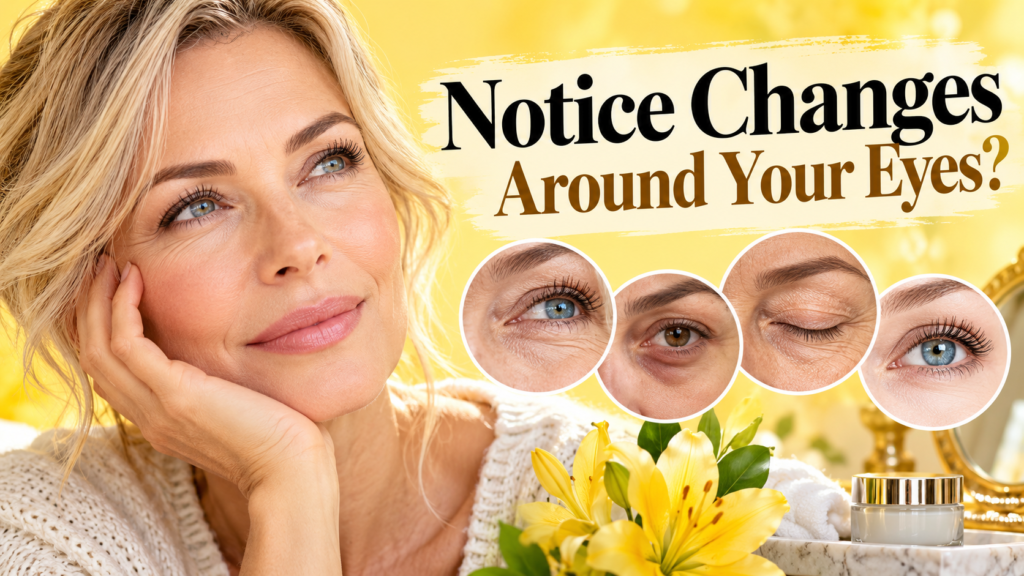
If your eyes have started looking more tired, creased, or puffy even when you feel well-rested, you may be noticing some of the natural changes that happen as skin ages. The area around the eyes is especially revealing because the skin there is delicate and can show changes in hydration, elasticity, and texture sooner than other areas of the face.
Dark circles, under-eye puffiness, fine lines, and a less refreshed appearance can have several different causes. Understanding what is happening can make it easier to build a realistic skincare and beauty routine that supports healthier-looking skin as you get older.
1. Fine Lines Become More Noticeable
One of the most common changes around the eyes is the gradual appearance of fine lines.
Over time, the skin naturally becomes less resilient. Collagen and elastin production decline with age, while the skin’s ability to retain moisture can also change. This can make small lines that were barely noticeable in earlier years become more visible.
Repeated facial expressions, including smiling and squinting, can also contribute to lines around the eyes.
Keeping the skin moisturised and protecting it from excessive sun exposure can help support its appearance.

2. The Under-Eye Area May Look Drier
The skin around the eyes is naturally thin and delicate. As we age, changes in the skin barrier and moisture retention can make this area appear drier.
pronounced. When skin lacks hydration, fine lines can appear more pronounced, and the overall texture may look less smooth.
Simple habits can make a difference to how hydrated the eye area looks:
- Use a gentle moisturiser suitable for your skin.
- Avoid excessive rubbing around the eyes.
- Drink enough fluids throughout the day.
- Protect exposed skin from the sun.
Ageing Hydration does not stop the natural ageing process, but well-moisturised skin generally has a smoother, healthier-looking appearance.
3. Dark Circles Can Become More Visible
Dark circles are another concern many women notice as they get older.
They do not have one single cause. Genetics, pigmentation, visible blood vessels, shadows created by changes in facial structure, lack of sleep, and thinning skin can all influence how dark the area beneath the eyes appears.
As the skin becomes thinner, underlying structures can sometimes become more visible, making the area look darker or more hollow.
This is why simply getting more sleep does not always completely eliminate dark circles. Different causes require different approaches, and some types of under-eye darkness are largely genetic.

4. Puffiness May Become More Obvious
Waking up with puffy eyes can happen at almost any age, but some women notice the appearance becomes more pronounced over time.
Fluid retention, sleep patterns, allergies, dietary factors, and the natural ageing process can all play a role. Changes in the tissues surrounding the eyes can also affect how fluid is distributed.
If puffiness is occasional, lifestyle factors may be worth considering. Getting consistent sleep, managing allergies where appropriate, and avoiding excessive rubbing can all support a fresher-looking appearance.
Persistent or sudden swelling, particularly when accompanied by other symptoms, is something that should be discussed with a healthcare professional.
5. Skin May Lose Some of Its Firmness
Collagen is an important structural protein found throughout the skin. As we age, the body’s production of collagen naturally decreases.
This gradual change can contribute to reduced firmness and elasticity. Around the eyes, where the skin is already thin, even subtle changes can affect the way the area looks.
This does not mean that every wrinkle or change around the eyes is caused by collagen loss. Skin ageing is influenced by many interacting factors, including genetics, sun exposure, hormones, lifestyle, and environmental stress.
Understanding that can help set more realistic expectations about skincare and beauty products.

6. The Eye Area Can Look More Tired
Sometimes the biggest change is not one particular wrinkle or dark circle. Instead, the entire eye area may simply look less refreshed.
A combination of fine lines, dryness, puffiness, pigmentation, and changes in skin firmness can create a tired-looking appearance.
Lifestyle can contribute as well. Poor sleep, ongoing stress, smoking, excessive sun exposure, and an unbalanced diet can all affect the overall appearance of the skin.
A consistent approach is usually more useful than searching for one miracle product.
7. Makeup May Sit Differently Around the Eyes
As skin texture changes, makeup can behave differently.
Foundation or concealer that once appeared smooth may settle into fine lines or emphasise dryness. Heavy layers can sometimes make texture more noticeable rather than disguising it.
Preparing the skin with gentle hydration can help create a smoother-looking base. Using lighter layers and avoiding excessive powder around dry areas may also make makeup look more natural.
The goal does not have to be hiding every sign of ageing. Healthy-looking, hydrated skin can often create a more refreshed appearance without relying on heavy coverage.

8. Your Overall Skin Texture Can Change
The changes around the eyes are part of a much bigger process affecting the entire face.
With age, skin can become thinner, drier, and less elastic. Collagen production declines, and the skin may recover more slowly from everyday environmental stress.
Sun exposure is particularly important because cumulative ultraviolet exposure can contribute to premature skin ageing. Daily sun protection therefore remains one of the most practical habits for maintaining healthier-looking skin over time.
A balanced beauty routine should focus on the whole picture rather than one isolated concern.
Where Kollagen Intensiv May Fit Into a Beauty Routine
For women interested in supporting their skin from within, collagen intensives can be considered as one component of an overall beauty routine.
Collagen supplements are designed to provide collagen-derived peptides or other ingredients intended to support the body’s nutritional needs. Research into oral collagen and skin appearance has produced some promising findings, although results can vary between individuals and supplements.
It is important to keep expectations realistic. A collagen supplement is not a replacement for sunscreen, nutritious food, adequate sleep, hydration, or a consistent skincare routine.
Someone considering Kollagen Intensiv may therefore view it as an additional part of their approach to maintaining healthy-looking skin rather than as a solution for a specific eye concern.

A More Realistic Approach to Ageing Eyes
There is nothing unusual about noticing changes around your eyes as you get older. Fine lines, dryness, dark circles, puffiness, and changes in firmness can all be part of normal skin ageing.
Rather than trying to eliminate every sign of age, a more practical goal is to support the skin and maintain a fresh, healthy-looking appearance.
That means paying attention to hydration, sun protection, sleep, nutrition, gentle skincare, and lifestyle habits. For those who are interested in nutritional support, a product such as Kollagen Intensiv may also have a place within that broader routine.
Your eyes may change with age, but understanding why those changes happen can help you make smarter, more realistic choices about caring for your skin.
Don’t miss our next eye-care tip. Subscribe and have helpful advice delivered
straight to your inbox.