
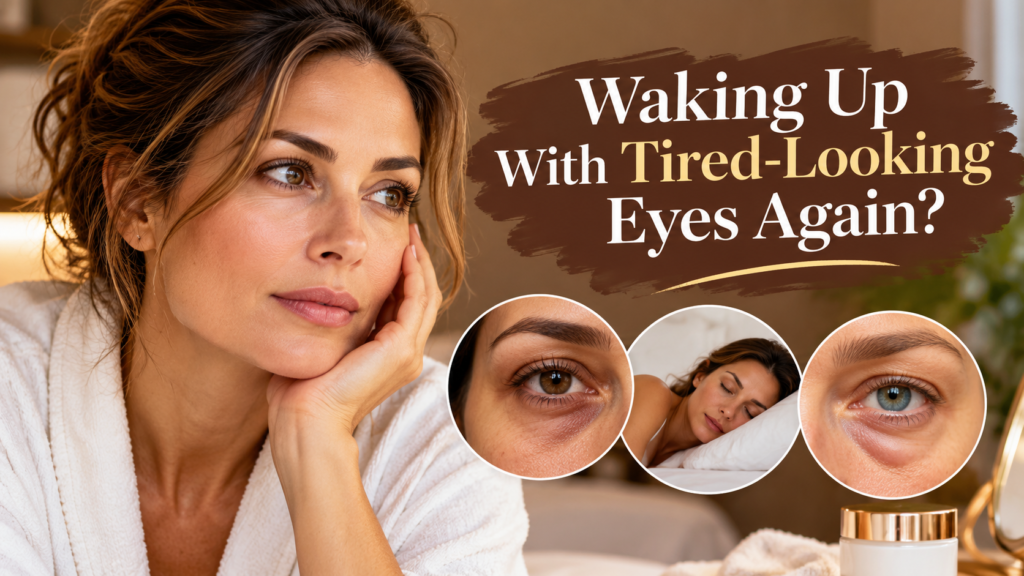
You go to bed hoping to wake up looking refreshed, yet the mirror sometimes tells a completely different story.
Your under-eyes can look darker, puffier, drier, or suddenly more lined in the morning. Even if you slept reasonably well, your eyes may still give the impression that you had a restless night.
So what’s actually happening?
The delicate skin around your eyes responds to several factors while you sleep, from fluid movement and dehydration to your sleeping position and the natural effects of ageing. Understanding these factors can make it easier to work out why your eyes sometimes look more tired first thing in the morning.
Here are seven possible reasons your under-eyes may look worse when you wake up.
1. Overnight Fluid Retention Can Cause Puffiness
One of the simplest explanations for morning under-eye bags is fluid accumulation.
When you’re standing or sitting during the day, gravity helps influence how fluid moves through your body. When you spend several hours lying down, that distribution changes.
Some of the resulting fluid can collect around the eyes, where even a small amount of swelling can become noticeable.
This may make your lower eyelids appear:
- Puffy
- Heavier
- More swollen than usual
- Less defined around the eye area
Morning puffiness often becomes less noticeable as you get up and move around.
A cool compress can temporarily soothe the area, while sleeping with your head slightly elevated may help some people reduce the appearance of morning swelling.

2. Dehydrated Skin Can Make Fine Lines Stand Out
Your skin doesn’t stop losing moisture simply because you’re asleep.
Overnight water loss can leave the skin feeling drier by morning. Because the skin around your eyes is particularly thin and delicate, dehydration can make fine lines and uneven texture appear more obvious.
This can create the impression that you’ve suddenly developed more wrinkles overnight.
You haven’t.
Instead, existing lines may simply be more visible when the surrounding skin lacks moisture.
A gentle moisturiser can help support the skin barrier and improve the appearance of dryness. Look for hydrating ingredients that your skin tolerates well, and avoid using harsh cleansers around the eye area.
3. Collagen Naturally Declines With Age
If your main concern is fine lines, crepey-looking skin, or reduced firmness, natural collagen loss becomes increasingly relevant.
Collagen provides structural support within the skin. As we get older, the body’s production of collagen gradually declines.
At the same time, changes in elasticity and skin thickness can alter the way light and shadows appear around the eyes.
This can make under-eye lines, hollows, and shadows more noticeable.
Morning puffiness or dryness can temporarily exaggerate these changes, which is why your eye area may look significantly different from one morning to another.
While ageing cannot be stopped with a single skincare product, protecting your skin from excessive sun exposure, maintaining hydration, and following a consistent skincare routine can all form part of sensible long-term skin care.

4. The Way You Sleep May Affect Your Appearance
Your sleeping position could be another piece of the puzzle.
When your face remains pressed against a pillow for hours, the pressure may temporarily affect the appearance of the skin around your eyes.
Sleeping on your stomach or side may also make morning puffiness more noticeable for some people.
You may even notice that one side of your face looks slightly different from the other when you first wake up.
If you regularly experience morning puffiness, try paying attention to whether your sleeping position seems to make a difference.
Keeping your head slightly elevated may also be worth trying if it is comfortable for you.
5. What You Eat And Drink In The Evening Matters
Your evening habits can sometimes show up on your face the next morning.
A particularly salty meal can increase temporary water retention, potentially making facial puffiness more noticeable.
Alcohol may also affect hydration and sleep quality, which can contribute to a tired-looking appearance.
This doesn’t mean you need to avoid every food you enjoy.
Instead, notice patterns.
If you repeatedly wake up with noticeably puffier eyes after certain meals or drinks, your evening routine may be contributing to the difference.
Maintaining sensible hydration throughout the day and keeping particularly salty meals moderate may help support a more balanced routine.

6. Allergies Can Make Your Eyes Look Tired
Not every dark circle is caused by lack of sleep.
Allergies and environmental irritation can contribute to watery, itchy, or swollen eyes. If you rub your eyes frequently, the delicate surrounding skin can become irritated as well.
Congestion and irritation may also make shadows beneath the eyes more noticeable.
Your bedroom environment can therefore be worth considering.
Dust, allergens, bedding, and other environmental factors may contribute to irritation in susceptible people.
Regularly washing pillowcases and bedding, avoiding unnecessary eye rubbing, and keeping your skincare routine gentle may help.
If you frequently experience persistent itching, redness, swelling, or watery eyes, it’s worth discussing the symptoms with a healthcare professional.
7. Your Night-Time Skincare Routine Could Be Too Aggressive
Sometimes the problem isn’t that you’re using too little skincare.
It may be that you’re using too much.
The skin around your eyes can be more sensitive than other areas of your face. Strong exfoliating products, fragrances, or certain active ingredients may cause dryness or irritation when used too close to the eyes.
If your eye area looks tight, flaky, irritated, or unusually lined in the morning, consider whether your evening routine could be contributing.
A simpler routine may be more appropriate.
Gentle cleansing followed by a suitable moisturiser can be enough for many people. If you use active skincare ingredients, introduce them gradually and follow the product’s directions carefully.

What Does Collagen Have To Do With Your Under-Eyes?
It’s important to separate temporary morning changes from the longer-term effects of ageing.
Fluid retention can make your eyes look puffy when you wake up, while dehydration can temporarily emphasise fine lines.
Collagen loss is different.
It happens gradually and contributes to changes in firmness, elasticity, and skin structure over time.
That means you may be dealing with several factors at once: temporary morning puffiness sitting on top of skin that has naturally become thinner or less elastic with age.
This is one reason why improving the appearance of the eye area usually requires a broader skincare approach rather than relying on one solution.
Why Kollagen Intensiv May Be Worth Considering
For people interested in maintaining a smoother, more youthful-looking complexion, collagen-focused skincare can be one part of a broader beauty routine.
Kollagen Intensiv is an anti-ageing skincare cream designed for people concerned about visible signs of skin ageing.
Its appeal may be particularly relevant if your broader skincare goals include improving the appearance of fine lines, supporting hydration, and maintaining a smoother-looking complexion.
However, realistic expectations are important.
A topical skincare product should not be viewed as a guaranteed way to eliminate dark circles, puffiness, wrinkles, or under-eye bags. These concerns can have multiple causes, including genetics, anatomy, age, lifestyle, and temporary fluid changes.
If you decide to include Kollagen Intensiv in your routine, use it according to the manufacturer’s instructions and check that it is appropriate for the area where you intend to apply it.
Good skincare is generally about consistency rather than expecting dramatic overnight changes.

A Better Way To Think About Morning Under-Eyes
Your morning reflection doesn’t necessarily tell the whole story about your skin.
One day you may wake up with noticeably puffy eyes. The next morning, they may look considerably better.
That variation is a useful reminder that appearance can be influenced by temporary factors as well as long-term skin changes.
Consider the bigger picture:
- Are you getting consistent sleep?
- Are you staying adequately hydrated?
- Are certain evening foods contributing to puffiness?
- Are allergies irritating your eyes?
- Is your skincare routine too harsh?
- Are you protecting your skin from daily sun exposure?
- Are you using products consistently rather than constantly changing them?
Looking at these factors together can give you a much clearer understanding of what’s happening.
The Bottom Line
Waking up with dark circles, puffy eyes, or more noticeable under-eye lines doesn’t automatically mean your skin has suddenly aged.
Overnight fluid retention, dehydration, sleeping position, evening habits, allergies, skincare irritation, and natural collagen loss can all influence how your eyes appear in the morning.
The goal isn’t to chase every temporary change.
Instead, focus on gentle skincare, consistent hydration, healthy daily habits, sun protection, and realistic expectations about what skincare products can achieve.
And if your under-eye appearance changes suddenly, becomes painful, or is accompanied by persistent swelling or other unusual symptoms, professional medical advice is more appropriate than simply changing your skincare routine.
Your eyes may look different from morning to morning—but understanding why can be the first step toward taking better care of the delicate skin around them.
Keep learning. Subscribe for more simple tips to help care for your eyes as
they age.