
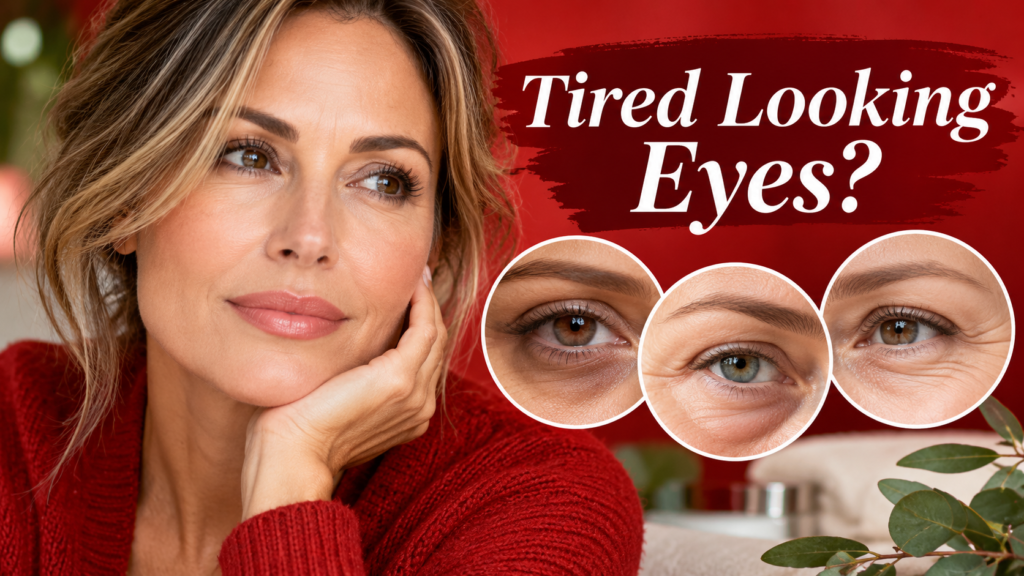
Have you ever looked in the mirror and thought, “Why do I look so tired when I actually feel fine?”
Your eyes can have a surprising effect on how your entire face looks. Dark circles, puffiness, fine lines, dryness, and a loss of firmness around the eyes can create a tired or older-looking appearance—even after a good night’s sleep.
The good news is that tired-looking eyes are not always about sleep. Several everyday factors can influence the delicate skin surrounding your eyes. Understanding what is happening can help you build a more thoughtful skincare and beauty routine.
Here are seven common reasons your eyes may be making you look more tired than you actually are.
1. The Skin Around Your Eyes Is Naturally Delicate
The skin surrounding the eyes is thinner and more delicate than much of the skin on the rest of your face.
Because there is less tissue supporting this area, changes in hydration, elasticity, and skin structure can become noticeable more quickly. Fine lines may appear more obvious, while shadows and uneven texture can make the eye area look dull or fatigued.
This is one reason why your eyes may be among the first areas where you notice visible signs of skin aging.
2. Dark Circles Can Create a Constantly Tired Appearance
Dark circles are one of the most common reasons people feel their eyes look tired.
They can have several contributing factors, including genetics, natural skin tone, visible blood vessels, pigmentation, and the way light creates shadows beneath the eyes.
Lack of sleep can certainly make the appearance more noticeable, but it is not necessarily the only explanation.
For some people, the structure of the area beneath the eyes and gradual changes in the skin can make dark shadows appear more prominent over time.
3. Puffiness Can Change the Shape of Your Eye Area
Puffy eyes can make the face look tired, even when you have had plenty of rest.
Temporary puffiness may be influenced by factors such as fluid retention, salty foods, allergies, crying, or simply how you slept.
As skin ages, changes in firmness can also affect how the area around the eyes looks. When combined with shadows or fine lines, puffiness can contribute to a noticeably fatigued appearance.
Simple habits such as staying hydrated, getting adequate rest, and being gentle when removing makeup can help support the appearance of this delicate area.

4. Collagen Loss Can Make Fine Lines More Noticeable
Collagen is an important structural protein found naturally in the skin. As we age, the body’s production of collagen gradually decreases.
This natural process can contribute to changes in skin firmness, elasticity, and texture. Around the eyes, where the skin is already thin, fine lines may become increasingly visible.
Sun exposure and other environmental factors can also contribute to visible skin aging.
You cannot stop the natural aging process, but supporting your skin with sensible skincare, sun protection, good nutrition, and healthy lifestyle habits can help maintain its overall appearance.
5. Dehydrated Skin Can Emphasize Fine Lines
Sometimes the issue isn’t simply wrinkles—it is dehydration.
When the skin lacks sufficient moisture, it can appear dull, rough, or less smooth. Fine lines may also look more noticeable because dry skin tends to have a less supple appearance.
The eye area can be particularly sensitive to changes in hydration.
Drinking enough fluids throughout the day and using skincare products designed to support the skin barrier can help maintain a smoother-looking complexion. Moisturizing the delicate eye area can also be useful if dryness is contributing to its tired appearance.

6. Everyday Lifestyle Habits Can Show Around Your Eyes
Your daily routine can have a bigger impact on your appearance than you might realize.
Long periods of screen use, insufficient sleep, stress, smoking, excessive alcohol consumption, poor nutrition, and inadequate hydration can all influence how refreshed your skin appears.
This does not mean one late night will suddenly age your face. Skin appearance is influenced by many factors over time.
A few simple habits can make a difference to your overall beauty routine:
- Aim for consistent, quality sleep.
- Stay adequately hydrated.
- Eat a varied, nutrient-rich diet.
- Protect your skin from excessive sun exposure.
- Avoid rubbing or pulling the delicate eye area.
- Give your eyes regular breaks from prolonged screen use.
The goal is not perfection. Consistency is far more realistic.
7. Your Skin May Need More Support as You Age
One reason your eyes may gradually look more tired is simply that your skin is changing.
With age, collagen production decreases, skin elasticity can decline, and the skin’s ability to retain moisture can change. These processes can make fine lines, uneven texture, and shadows more visible.
This is where taking a broader approach to skincare can make sense.
Instead of focusing exclusively on one visible concern, consider the overall condition of your skin—hydration, nutrition, sun protection, sleep, skincare habits, and the nutrients your body needs to support normal skin function.

Could Collagen Be Part of Your Beauty Routine?
Collagen supplements have become increasingly popular among people interested in supporting their skin from within.
Kollagen Intensiv is one option people may consider as part of a broader beauty and skincare routine. Collagen-focused supplements are generally intended to complement healthy lifestyle habits rather than replace them.
It is important to keep expectations realistic. A supplement cannot erase normal aging, instantly remove dark circles, or guarantee a particular cosmetic result.
However, for someone looking at the bigger picture of skin care, a collagen supplement may be one consideration alongside hydration, nutritious food, adequate sleep, sun protection, and a consistent skincare routine.
The most sensible approach is to think of collagen as one part of an overall strategy rather than a quick fix for tired-looking eyes.
The Bigger Picture Behind Tired-Looking Eyes
Your eyes can reveal changes in the skin long before you notice them elsewhere on your face.
Dark circles, puffiness, dehydration, fine lines, reduced elasticity, and natural collagen loss can all contribute to an appearance that looks more tired than you actually feel.
Understanding these factors makes it easier to focus on what you can realistically control.
Rather than chasing one overnight solution, pay attention to the fundamentals: protect your skin, stay hydrated, get enough rest, eat well, treat the eye area gently, and maintain a consistent beauty routine.
Your eyes may still show signs of natural aging—and that’s completely normal. The goal is not to stop time but to support healthy-looking skin and help your face look as refreshed and cared for as possible.
Don’t stop here. Subscribe for more practical tips on caring for your eyes as
they age.