
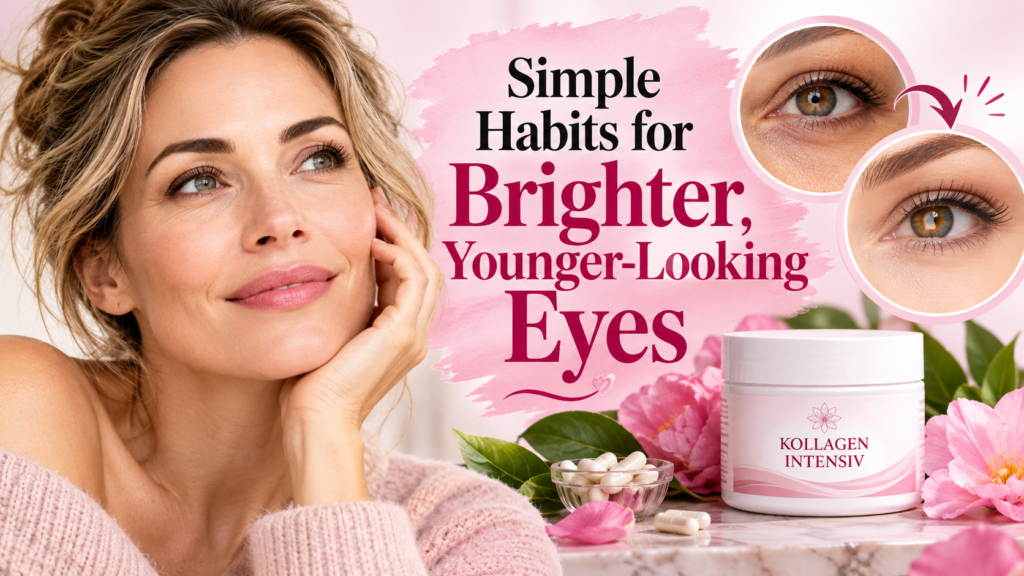
Your eyes can make you look more tired than you actually feel. Even after a good night’s sleep, dull-looking eyes, dark circles, puffiness, and fine lines can make your face appear older or less refreshed.
The good news is that your daily habits can influence how the delicate skin around your eyes looks over time. While no single habit can completely transform your appearance, making a few consistent changes may help support healthier-looking, more hydrated, and refreshed skin.
Here are seven habits worth considering if your eyes have started looking tired, dull, or aged.

1. Make Hydration Part of Your Daily Routine
Dehydrated skin can look less plump and more noticeable around areas where the skin is naturally thin, including beneath the eyes.
When your overall fluid intake is inadequate, your skin may appear dry or lack its usual freshness. Fine lines can also become more noticeable when the skin is lacking moisture.
Instead of waiting until you’re thirsty, make drinking enough fluids throughout the day a regular habit.
Hydration also comes from foods such as.
- Water-rich fruits
- Vegetables
- Soups and broths
- Other nutritious foods containing plenty of water
Keeping your skin hydrated won’t necessarily eliminate dark circles or wrinkles, but it can contribute to a healthier-looking complexion.
2. Give Your Eyes Enough Rest
Long periods of screen use, late nights, and inconsistent sleep can contribute to a tired appearance.
When you’re constantly looking at phones, tablets, computers, or televisions, your eyes may feel strained and your face can appear less refreshed.
Try creating a more consistent sleep routine and taking regular breaks from screens during the day.
A simple habit is to periodically look away from your screen and focus on something farther away. Reducing screen exposure before bedtime may also make it easier to maintain a relaxing evening routine.
Sleep isn’t a cosmetic cure-all, but getting adequate rest is an important part of looking and feeling refreshed.

3. Don’t Ignore Sun Protection
Sun exposure is one of the everyday environmental factors that can contribute to visible skin aging.
Repeated exposure to ultraviolet radiation can affect the skin’s structure over time, contributing to changes in firmness, texture, pigmentation, and the appearance of fine lines.
The skin around your eyes is particularly delicate, so protecting your face from excessive sun exposure is an important part of a long-term skincare routine.
Consider making broad-spectrum sunscreen, sunglasses, shade, and protective clothing part of your regular habits.
Protecting your skin consistently is generally more useful than trying to compensate for years of sun exposure later.
4. Be Gentle With the Skin Around Your Eyes
The skin surrounding your eyes is thinner and more delicate than much of the skin on your face.
Rubbing your eyes, aggressively removing makeup, or pulling at the skin can create unnecessary irritation.
Instead, handle the area gently when cleansing or removing makeup.
A simple approach is to use gentle movements rather than repeatedly rubbing the skin. If a particular skincare product causes burning, redness, or irritation, reconsider whether it belongs in your routine.
Sometimes improving your habits isn’t about adding another product. It’s about being gentler with what you already have.

5. Pay Attention to Your Overall Nutrition
Your skin requires a variety of nutrients to maintain its normal structure and function.
A balanced diet containing adequate protein, fruits, vegetables, healthy fats, and other nutrient-rich foods can support overall skin health.
Collagen is particularly relevant when discussing skin aging because collagen is an important structural protein found in the skin. As we age, collagen production naturally changes, and this can contribute to gradual changes in firmness and elasticity.
This doesn’t mean that simply consuming more collagen will automatically erase wrinkles or dark circles. Skin aging is influenced by many factors, including genetics, sun exposure, age, lifestyle, and overall nutrition.
Thinking about nutrition as part of the bigger picture is a more realistic approach.
6. Consider How Collagen Fits Into Your Beauty Routine
If you’re concerned about fine lines, loss of firmness, or skin that looks less youthful, collagen may already be something you’ve considered.
Kollagen Intensiv is one option people may choose to incorporate into an overall beauty routine. Rather than viewing it as a quick fix for dull eyes, it makes more sense to consider it alongside everyday habits such as hydration, sun protection, adequate sleep, gentle skincare, and a balanced diet.
The reason collagen attracts attention in beauty routines is its connection with the skin’s structure and elasticity. However, individual responses to beauty products and supplements can vary, and realistic expectations are important.
Kollagen Intensiv can therefore be considered as one component of a broader approach to supporting the appearance of healthy-looking skin, rather than something expected to solve every visible sign of aging around the eyes.

7. Look at the Bigger Picture
Sometimes dull-looking eyes aren’t caused by one specific problem.
Dark circles may be influenced by genetics, pigmentation, shadows created by facial structure, lack of sleep, or other factors. Puffiness can also have different causes, while fine lines naturally become more noticeable as skin ages.
That’s why focusing on one symptom may not always provide the answer you’re looking for.
Instead, look at your daily routine as a whole.
Ask yourself:
- Am I getting enough consistent sleep?
- Am I staying adequately hydrated?
- Am I protecting my skin from the sun?
- Am I being gentle when caring for the eye area?
- Does my diet provide a good variety of nutrients?
- Am I maintaining a consistent skincare routine?
- Could a collagen-focused beauty product fit into my existing routine?
Small improvements made consistently can be more practical than constantly switching from one beauty trend to another.

Why Your Eyes Can Look Older Over Time
The appearance of the eye area changes naturally with age. Skin gradually loses some of its youthful structure, elasticity, and moisture, while collagen production changes.
At the same time, years of sun exposure and everyday lifestyle factors can contribute to visible changes in the skin.
This is why someone may notice several concerns at once: fine lines, less firmness, dryness, puffiness, uneven tone, or a generally tired appearance.
Understanding this can make your skincare approach more realistic. Instead of looking for one product that promises to reverse everything, consider the different factors that influence the appearance of your skin.
A More Consistent Approach to Brighter-Looking Eyes
Dull-looking eyes can be frustrating, especially when they make you appear tired despite feeling fine.
There isn’t one universal solution because dark circles, puffiness, fine lines, and changes in skin elasticity can have different causes.
However, healthy daily habits provide a sensible foundation. Prioritizing adequate rest, hydration, sun protection, gentle skincare, good nutrition, and consistent routines can all play a role in maintaining healthier-looking skin.
For those interested in collagen as part of their beauty routine, Kollagen Intensiv may be another option to consider alongside these fundamentals.
The goal isn’t to chase overnight changes. It’s to build habits that support your skin consistently and take a realistic, long-term approach to maintaining a fresher, healthier-looking appearance.
Don’t miss our next eye-care tip. Subscribe and have helpful advice delivered
straight to your inbox.