
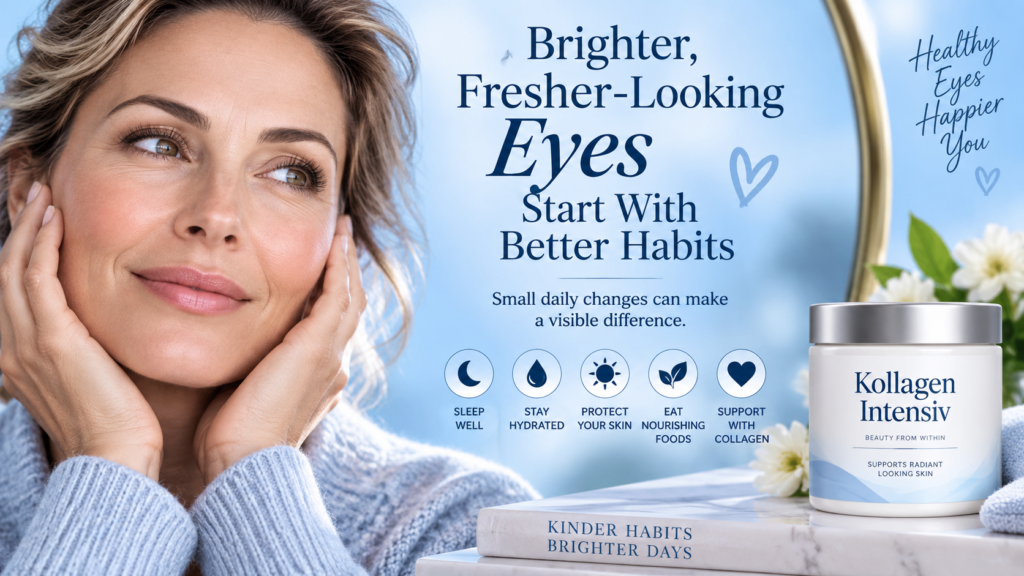
Have you ever looked in the mirror and noticed that your eyes appear more tired than you feel? Dark circles, puffiness, fine lines, and dull-looking skin around the eyes can change your entire appearance, even after a good night’s sleep.
The delicate skin surrounding your eyes is particularly vulnerable to visible signs of ageing and everyday stress. While you cannot stop the natural ageing process, small daily habits can help support healthier-looking skin and a more refreshed appearance.
From improving hydration to supporting your skin’s natural structure, the right approach involves more than simply applying another eye cream.
In this article, we’ll explore 7 everyday practices for supporting healthy-looking eyes, including how collagen loss, lifestyle choices, and your overall beauty routine may influence the appearance of the delicate eye area.

1. Prioritise Consistent, Quality Sleep
When your eyes look tired, your sleep habits are a natural place to start.
Insufficient sleep can contribute to a tired appearance, while disrupted sleep may make existing concerns such as puffiness and dark circles more noticeable.
Although everyone’s sleep needs differ, most adults benefit from approximately 7–9 hours of sleep each night.
Creating a consistent nighttime routine may help support both your overall well-being and the appearance of your eyes.
Consider these simple habits:
- Maintain a regular bedtime and wake-up schedule.
- Reduce screen exposure before bed.
- Create a comfortable, dark sleeping environment.
- Avoid regularly sacrificing sleep for late-night activities.
Sleep alone won’t eliminate every under-eye concern, but it can be an important part of maintaining a refreshed appearance.
2. Keep Your Skin Properly Hydrated
Hydration plays an important role in maintaining healthy-looking skin.
When the skin’s outer layer becomes dehydrated, fine lines and uneven texture may appear more noticeable. The delicate skin around the eyes can be particularly sensitive to changes in moisture.
Drinking enough water throughout the day supports normal bodily functions, while a suitable moisturiser helps maintain the skin’s surface hydration.
For your eye area, look for gentle skincare products designed for your skin type.
Ingredients commonly used in hydrating skincare include:
- Hyaluronic acid
- Glycerin
- Ceramides
- Other skin-conditioning ingredients
These ingredients can help support the skin’s moisture barrier and improve its hydrated appearance.
However, it’s important to remember that hydrated skin is not the same as permanently reducing wrinkles. Consistent skincare works best when combined with realistic expectations.
3. Protect the Delicate Eye Area From Sun Exposure
Daily sun protection is one of the most valuable habits for supporting healthy-looking, ageing skin.
Ultraviolet (UV) radiation contributes to premature skin ageing and can affect collagen and elastin, proteins involved in skin structure and elasticity.
Over time, cumulative sun exposure may contribute to visible concerns such as:
- Fine lines and wrinkles
- Uneven skin tone
- Loss of skin elasticity
- Changes in skin texture
The skin around your eyes deserves particular attention because it is thin and easily exposed to sunlight.
Apply a broad-spectrum sunscreen with SPF 30 or higher, following product directions. Sunglasses and a wide-brimmed hat can provide additional protection.
Be careful when applying products near your eyes, and choose formulations that are appropriate for the sensitive eye area.
Protecting your skin consistently can be more beneficial than relying exclusively on anti-ageing products later.

4. Understand How Collagen Loss Affects Skin Ageing
Collagen is a structural protein that helps provide skin with strength and support.
As we age, the body generally produces less collagen, and existing collagen can become altered or degraded. These changes contribute to the gradual development of visible signs of skin ageing.
The skin around the eyes may show these changes through fine lines, reduced firmness, and altered texture.
However, not every eye concern is caused by collagen loss.
Dark circles, for example, can have multiple contributing factors, including genetics, pigmentation, visible blood vessels, shadows from facial structure, and thinning skin. Puffiness may also be influenced by fluid retention, allergies, sleep patterns, and other factors.
Understanding these differences helps you choose a more realistic skincare strategy.
Rather than expecting one product to address every concern, consider combining sun protection, hydration, healthy lifestyle habits, and targeted skincare.
5. Be Gentle When Removing Makeup
The skin around your eyes is delicate, and unnecessary rubbing can cause irritation.
If you regularly wear mascara, eyeliner, or concealer, removing makeup carefully can help reduce mechanical stress on the skin.
Instead of scrubbing aggressively, use a gentle makeup remover suitable for the eye area. Follow the product’s instructions and avoid pulling or stretching the skin.
You can also support your daily routine by:
- Choosing fragrance-free products if your skin is sensitive.
- Avoiding skincare ingredients that cause irritation.
- Removing makeup before going to bed.
- Replacing eye makeup according to product guidelines.
Gentle habits may seem small, but consistency matters when caring for delicate skin.
If you experience persistent irritation, swelling, or discomfort around your eyes, consider seeking advice from an appropriate healthcare professional.

6. Support Your Skin Through Everyday Nutrition
Your skin relies on a variety of nutrients to maintain its normal structure and function.
A balanced diet containing adequate protein, fruits, vegetables, and healthy fats can support overall health, including the nutritional needs involved in maintaining skin.
Vitamin C, for example, contributes to normal collagen formation. Protein provides amino acids that the body uses for many essential functions.
Rather than focusing on one so-called beauty food, aim for variety in your everyday meals.
Useful nutritional habits include:
- Eating a range of colourful vegetables and fruits.
- Including protein-rich foods in your meals.
- Choosing healthy sources of dietary fats.
- Maintaining adequate fluid intake.
- Avoiding overly restrictive diets without professional guidance.
Nutrition cannot guarantee a particular appearance around your eyes, but a balanced eating pattern can support your broader skin-health goals.

7. Consider Kollagen Intensiv as Part of Your Beauty Routine
If you’re already working on hydration, sun protection, and healthy lifestyle habits, you may also be considering a collagen-focused beauty supplement.
Kollagen Intensiv can be considered as one potential addition to an overall beauty routine.
Collagen supplements are designed to provide collagen or collagen-derived peptides. Research on some oral collagen products has investigated outcomes such as skin hydration and elasticity, although study results vary, and more independent research is needed to establish how reliably benefits translate across different products and individuals.
It’s important to distinguish between supporting general skin appearance and claiming that a supplement can specifically eliminate dark circles, eye bags, or wrinkles.
Kollagen Intensiv should not be viewed as a guaranteed solution for every visible eye concern. Instead, someone might consider it alongside established skincare habits, particularly if their interest is in supporting the broader appearance of ageing skin.
Before introducing any supplement, review its ingredients and follow the manufacturer’s directions. If you’re pregnant, breastfeeding, taking medication, or managing a health condition, seek appropriate professional advice about whether it is suitable for you.
A thoughtful beauty routine is about understanding what a product may realistically offer rather than expecting overnight transformation.

Why Your Overall Routine Matters More Than One Product
It’s easy to focus on a single concern when you notice tired-looking eyes in the mirror.
You might search for solutions to dark circles one day, puffiness the next, and under-eye wrinkles shortly afterward. However, the appearance of your eye area can be influenced by several different factors at the same time.
Your approach should reflect that reality.
A practical routine may include:
- Getting consistent, adequate sleep.
- Applying daily sun protection.
- Maintaining skin hydration.
- Eating a balanced diet.
- Handling the eye area gently.
- Choosing skincare products carefully.
- Considering additional beauty products with realistic expectations.
This approach encourages long-term consistency instead of constantly switching between products in search of immediate results.

Final Thoughts: Supporting Healthy-Looking Eyes Every Day
Tired-looking eyes, dark circles, puffiness, and fine lines are common concerns, but they don’t all have the same causes or solutions.
Collagen loss and natural skin ageing play a role in changes to skin structure, while sleep, sun exposure, hydration, genetics, and everyday habits can also influence how your eye area looks.
The most useful strategy is to focus on sustainable habits that support your skin over time.
Protect your eyes from excessive sun exposure, maintain hydration, treat delicate skin gently, and pay attention to your overall health. If you’re interested in adding a collagen-focused supplement such as Kollagen Intensiv, consider it as part of a broader beauty routine rather than a replacement for consistent skincare.
Healthy-looking skin is built through informed choices and regular care—not unrealistic promises of overnight results.
Want more ways to care for your eyes? Subscribe for simple, practical tips
and helpful advice.