
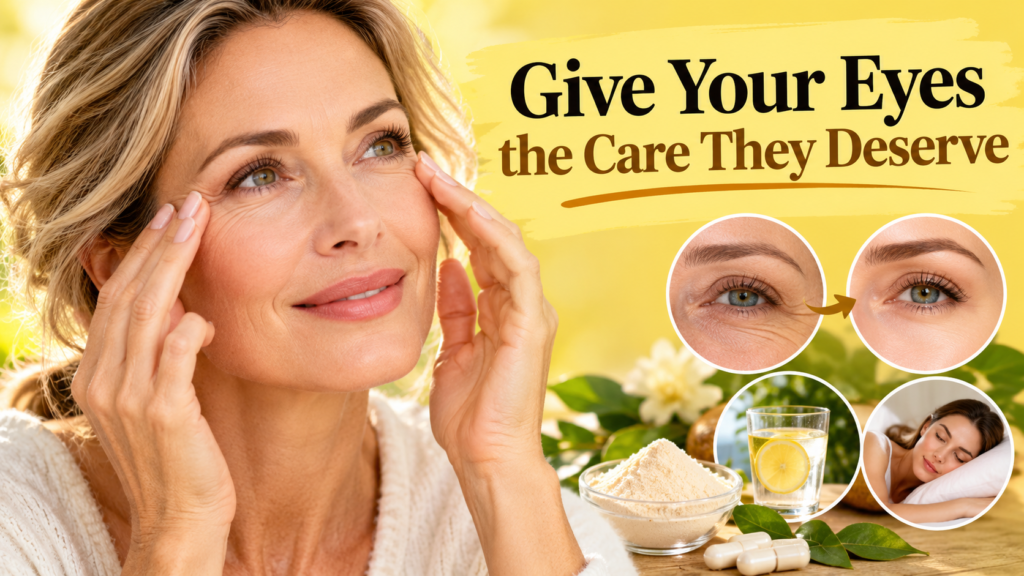
Your eyes can make you look more tired or older than you actually feel. Dark circles, puffiness, fine lines, dryness, and a less refreshed appearance can gradually become more noticeable with age. And while you cannot stop the natural aging process, there are simple ways to give the delicate skin around your eyes more attention.
The good news is that caring for aging eyes does not have to mean creating a complicated beauty routine. A few consistent habits can support healthier-looking skin, improve hydration, and help your eyes appear more refreshed.
1. Keep the Skin Around Your Eyes Hydrated
The skin around the eyes is naturally thin and delicate, which means dryness can make fine lines and texture more noticeable.
Using a gentle eye-area moisturizer can help maintain the skin’s moisture barrier. Look for products designed for the sensitive eye area and avoid applying harsh ingredients too close to the eyes.
Hydrated skin generally looks smoother and more supple, making this one of the simplest steps you can add to an anti-aging skincare routine.

2. Get Enough Quality Sleep
Sometimes the biggest difference you can make to tired-looking eyes happens before you even reach your skincare products.
Poor or inconsistent sleep can contribute to a tired appearance, including noticeable puffiness and dark-looking areas beneath the eyes. While everyone’s sleep needs are different, maintaining a regular sleep schedule can support your overall appearance as well as your general well-being.
If your eyes frequently look exhausted in the morning, take a closer look at your sleep routine.
3. Be Gentle When Removing Makeup
Rubbing or pulling at the delicate skin around your eyes can cause unnecessary irritation.
Instead of aggressively removing mascara or eye makeup, use a gentle makeup remover and allow it to loosen the product before wiping it away carefully.
Small changes in how you handle the eye area can make your daily skincare routine much kinder to aging skin.

4. Protect Your Eyes From Sun Exposure
Sun exposure is one of the environmental factors associated with visible skin aging. Repeated exposure can contribute to changes in skin texture, pigmentation, and the appearance of fine lines over time.
Make sun protection part of your everyday routine. Wearing sunglasses, seeking shade, and using suitable broad-spectrum sunscreen on exposed skin can help reduce unnecessary UV exposure.
Don’t forget that the skin around your eyes needs consideration too.
5. Pay Attention to Collagen Loss
Collagen is an important structural protein found throughout the skin. As we age, the body’s natural collagen production gradually changes, which can contribute to reduced firmness and elasticity.
This is one reason mature skin may begin to look thinner, less plump, or more lined than it did when you were younger.
You cannot completely prevent age-related collagen changes, but supporting your skin through a balanced diet, good hydration, sun protection, and consistent skincare can be part of a sensible approach to maintaining healthy-looking skin.

6. Don’t Ignore Your Overall Hydration
Dry-looking skin can make lines and uneven texture stand out more prominently. Maintaining adequate fluid intake throughout the day is therefore an easy habit worth considering.
Hydration is not a magic solution for dark circles or wrinkles, but it is an important part of looking after your skin from day to day.
Combine good hydration habits with moisturizing skincare rather than relying on a single product or technique.
7. Look at Your Diet as a Whole
Healthy-looking skin is supported by overall nutrition, not one particular food.
A balanced eating pattern that includes protein, fruits, vegetables, healthy fats, and other nutrient-rich foods can provide your body with the nutrients it needs for normal skin maintenance.
Protein is particularly relevant because collagen itself is a protein. However, eating one specific food will not suddenly reverse visible signs of aging around the eyes.
Think consistency rather than quick fixes.
8. Give Puffy Eyes Some Extra Attention
Morning puffiness can make the eye area look heavier and more tired than usual. Temporary fluid retention, lack of sleep, allergies, and other everyday factors can all influence how the area appears.
Simple habits may help your eyes look more refreshed, such as getting adequate sleep, avoiding excessive rubbing, and keeping your skincare routine gentle.
A cool compress can also feel soothing when your eyes look particularly puffy after a restless night.
9. Consider Collagen Support as Part of Your Routine
For people concerned about visible signs of skin aging, collagen supplements are another option to consider as part of a broader beauty routine.
Kollagen Intensiv is designed around collagen supplementation and can be considered alongside everyday habits such as hydration, nutritious food, sun protection, sleep, and skincare.
It is important to keep expectations realistic. A collagen supplement is not an instant solution for wrinkles, dark circles, or puffiness, and individual experiences can vary. The most sensible approach is to view collagen supplementation as one possible component of an overall skin-care strategy rather than a replacement for healthy habits.

10. Create a Routine You Can Actually Maintain
The best beauty routine is often the one you can follow consistently.
You do not need ten complicated products sitting beside your bathroom mirror. Start with the basics:
- Gentle cleansing
- Regular moisturization
- Daily sun protection
- Adequate hydration
- Nutritious food
- Consistent sleep
- Gentle treatment of the eye area
- A considered approach to collagen support
Over time, these small habits can become easier to maintain than constantly searching for another quick fix.
Why Aging Eyes Deserve Extra Attention
The eye area is one of the first places many people notice changes in their appearance. Fine lines may become more visible, skin can appear less firm, and dark circles or puffiness may become more noticeable.
That does not necessarily mean your skin is unhealthy. Aging is a normal process, and genetics, lifestyle, sun exposure, sleep, hydration, and natural changes in collagen and elasticity can all influence how your eyes look.
Instead of trying to completely eliminate every sign of aging, a more realistic goal is to support the skin and maintain a healthy, cared-for appearance.
A Simple Approach to Younger-Looking Eyes
There is no single trick that can turn back the clock on aging eyes. However, paying attention to the fundamentals can make your beauty routine more thoughtful and sustainable.
Protect your skin from excessive sun exposure, stay hydrated, get enough sleep, treat the eye area gently, eat a balanced diet, and consider whether collagen supplementation such as Kollagen Intensiv fits into your personal routine.
Most importantly, give your eyes consistent attention rather than waiting until signs of aging become your biggest concern. Small, sensible habits repeated over time can be a much more practical approach to caring for mature-looking skin.
Keep learning. Subscribe for more simple tips to help care for your eyes as
they age.