
Have you ever looked in the mirror and felt that your eyes make you appear more tired or older than you actually feel? Dark circles, puffy under-eyes, fine lines, and dull-looking skin can change the appearance of your entire face, even after a good night’s sleep.
The skin around your eyes is delicate and often shows visible signs of ageing, dehydration, and everyday stress. While you cannot stop the natural ageing process, small, consistent changes to your eye care routine may help your skin look healthier, smoother, and more refreshed.
From improving hydration to supporting your skin’s natural structure, these 10 simple eye care tips can help you take better care of the delicate area around your eyes.
Let’s explore what you can do and why collagen and overall skin health deserve attention.
1. Keep The Skin Around Your Eyes Hydrated
One of the simplest ways to support a fresher-looking eye area is to maintain adequate hydration.
When the skin becomes dehydrated, fine lines may appear more noticeable, and the area around your eyes can look dull or tired.
Use a gentle, fragrance-free moisturiser suitable for your skin type. Applying it carefully around the eye area can help support the skin barrier and reduce moisture loss.
Remember that moisturisers improve the skin’s hydration, but they cannot permanently remove wrinkles.
A simple daily habit: Apply moisturiser gently without rubbing or pulling the delicate skin.

2. Get Consistent, Quality Sleep
Your sleep routine can influence how your eyes look the following day.
Insufficient sleep may contribute to a tired appearance, increased puffiness, and more noticeable dark circles in some people.
Although sleep alone cannot eliminate every cause of dark circles, maintaining a consistent sleep schedule supports your overall health and gives your body time to recover from daily stress.
Try to:
- Maintain a regular bedtime.
- Aim for sufficient sleep each night.
- Reduce screen exposure before bed if it interferes with your sleep.
- Create a comfortable, relaxing sleeping environment.
Your eyes may benefit from a healthier routine, even if the results are not immediate.
3. Protect Your Eyes From Sun Exposure
Sun exposure plays an important role in premature skin ageing.
Ultraviolet (UV) radiation can contribute to collagen breakdown, changes in skin texture, and the development of fine lines and pigmentation.
The skin around your eyes is particularly delicate, making sun protection an important part of your beauty routine.
Consider using a broad-spectrum SPF 30 or higher sunscreen as directed, wearing sunglasses, and seeking shade when UV levels are high.
Be careful when applying sunscreen near your eyes, and choose products designed for the sensitive eye area when appropriate.
Protecting your skin today can help support its long-term appearance.

4. Avoid Rubbing Your Eyes
Do you frequently rub your eyes when you’re tired, experiencing irritation, or removing makeup?
Repeated rubbing can irritate the delicate skin around your eyes. It may also worsen discomfort and contribute to temporary redness or swelling.
Instead, use gentle movements when cleansing your face or removing eye makeup.
If your eyes frequently itch, water, or feel irritated, consider discussing these symptoms with an appropriate healthcare professional to identify potential causes.
Gentle treatment matters, especially when caring for skin that is thinner and more sensitive than other areas of your face.

5. Use A Cool Compress For Temporary Puffiness
Puffy eyes can sometimes be associated with sleep disruption, fluid retention, allergies, or other everyday factors.
A cool, clean compress placed over closed eyes for a short period may help temporarily reduce the appearance of puffiness.
Avoid placing ice directly on your skin, and stop if you experience discomfort.
This approach is not a permanent solution, but it can be a simple addition to your morning routine when your eyes look swollen or tired.
If swelling is persistent, painful, or accompanied by other symptoms, professional medical advice is appropriate.

6. Pay Attention To Collagen And Skin Ageing
Collagen is a protein that helps provide structure and support to your skin.
As you age, your body generally produces less collagen, and existing collagen can become damaged over time. These changes may contribute to reduced elasticity, fine lines, and changes in skin texture.
The area around your eyes can make these changes more noticeable because of its delicate structure.
However, collagen loss is only one part of the picture. Genetics, sun exposure, lifestyle, hydration, and natural facial movement can also influence how your skin looks.
Rather than focusing on one ingredient or product, consider a broader approach that supports your skin’s health over time.

7. Include Nutrient-Rich Foods In Your Diet
Your skin needs a range of nutrients to maintain its normal structure and function.
A balanced diet that includes protein, fruits, vegetables, healthy fats, and other nutrient-rich foods can support overall skin health.
Vitamin C, for example, contributes to normal collagen formation. Foods such as citrus fruits, berries, capsicum, and broccoli can help provide this nutrient.
No single food can prevent wrinkles or reverse skin ageing. However, consistently eating a varied diet is a practical way to support your body from within.
Healthy skin care begins with more than what you apply to your face.
8. Consider Collagen Supplements As Part Of Your Routine
If you are concerned about fine lines, skin elasticity, or the visible signs of ageing, you may have come across collagen supplements.
Collagen peptides have been studied for their potential effects on skin hydration and elasticity. Some clinical research suggests that certain collagen supplements may provide modest improvements, although results vary between products, studies, and individuals.
It is important to maintain realistic expectations. Collagen supplements are not guaranteed to reduce wrinkles, eliminate dark circles, or make your eyes look younger.
The quality of the evidence varies, and more research is needed to understand long-term benefits.
A collagen supplement may be something to consider alongside a balanced diet and consistent skin care routine, rather than as a replacement for either.

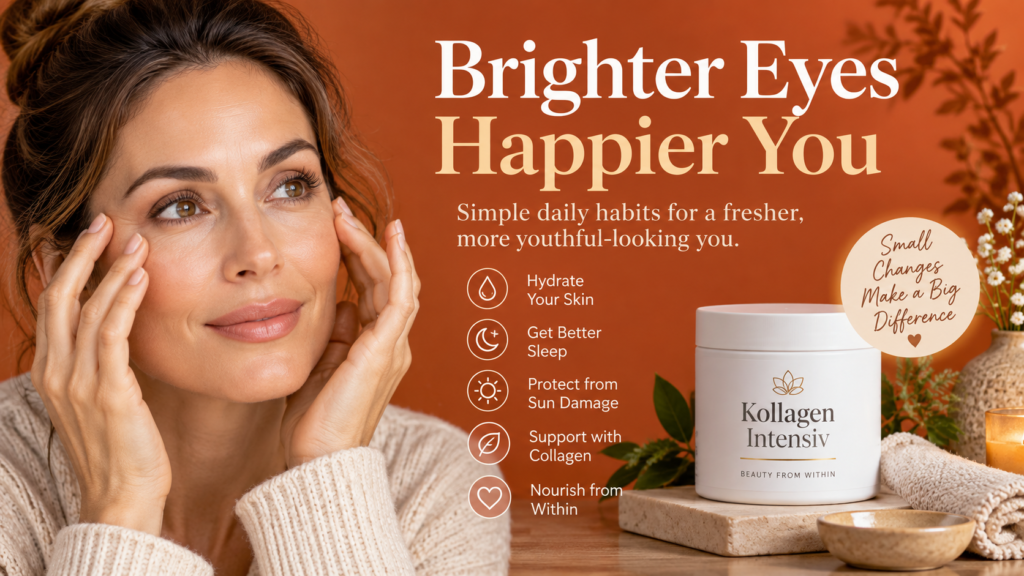
9. Why Consider Kollagen Intensiv?
Kollagen Intensiv may be an option for women who want to explore collagen supplementation as part of their overall beauty routine.
The product is positioned around collagen-focused beauty support, making it relevant to people interested in maintaining skin hydration, elasticity, and a healthier-looking appearance.
However, it is worth distinguishing between the potential benefits of collagen supplementation in general and proven results from a specific product.
Kollagen Intensiv should not be viewed as a guaranteed solution for dark circles, puffy eyes, wrinkles, or other signs of ageing.
If you are considering adding it to your routine, review the product’s ingredients, serving instructions, and relevant safety information. Individual results can differ, and a supplement should complement—not replace—basic skin care habits.
A sensible approach is to consider your overall beauty goals and whether a collagen product fits your personal needs and preferences.
10. Create A Consistent Evening Eye Care Routine
Your evening routine is an opportunity to care for your skin after a full day of sun exposure, makeup, and environmental stress.
You do not need an elaborate collection of products. A few consistent habits can make your routine easier to maintain.
Try this simple approach:
- Gently remove makeup and cleanse your skin.
- Apply a suitable moisturiser.
- Use any eye-area products according to their instructions.
- Prioritise a regular sleep schedule.
- Avoid rubbing or tugging the delicate skin around your eyes.
Consistency matters more than constantly changing products.
Give your routine time, and pay attention to how your skin responds.

Final Thoughts: Fresher-Looking Eyes Start With Consistent Care
Dark circles, puffiness, fine lines, and tired-looking eyes can have several causes, including genetics, ageing, sleep patterns, sun exposure, and changes in skin hydration.
While no single eye care tip can address every concern, combining simple daily habits can help you take a more thoughtful approach to your skin.
Focus on hydration, sun protection, quality sleep, gentle skin care, and a balanced diet. If you are interested in collagen supplementation, Kollagen Intensiv may be worth considering as one part of your broader beauty routine.
The goal isn’t to stop ageing. It’s to support your skin, care for yourself consistently, and feel confident in your appearance at every stage of life.
Want to know more about eye ageing? Subscribe for useful tips delivered
straight to your inbox.