
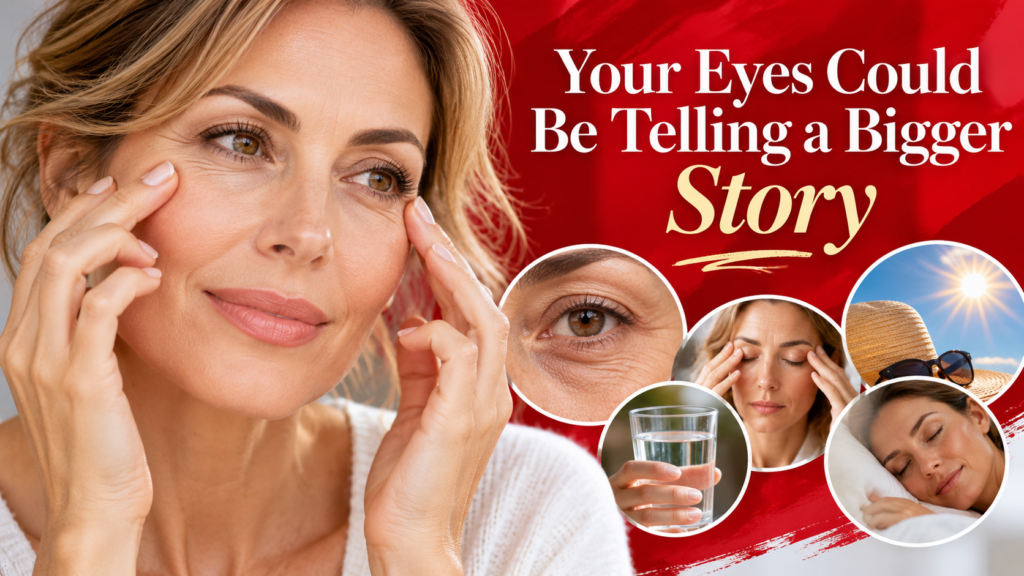
Have you ever looked in the mirror and wondered why your eyes suddenly seem more tired, puffy, or aged—even when you have been getting enough sleep? The answer may not be as simple as lack of rest.
The delicate skin around your eyes can change for many different reasons. Dark circles, puffiness, fine lines, dryness, and a tired-looking appearance can all be influenced by factors that are easy to overlook.
Some of these factors are part of normal skin ageing, while others are connected to everyday habits. Understanding what may be contributing to the appearance of your eyes can help you make more informed choices about your skincare and overall beauty routine.
1. Natural Collagen Loss
Collagen is an important structural protein found throughout the skin. As we age, the body’s natural production of collagen gradually decreases.
This can affect the skin’s firmness, elasticity, and overall appearance. Because the skin around the eyes is particularly thin and delicate, changes in collagen and elasticity can become noticeable in the form of fine lines and a less firm appearance.
This is one reason the eye area can sometimes make us look more tired or older than we actually feel.

2. Not Drinking Enough Water
Hydration can have a noticeable effect on the way skin looks.
When your body is not adequately hydrated, skin may appear drier or less plump. Around the eyes, this can make fine lines appear more noticeable and contribute to a dull, tired-looking appearance.
Drinking enough water throughout the day is a simple habit, but it is often overlooked when people concentrate on external skincare products.
3. Too Much Screen Time
Hours spent looking at phones, tablets, computers, and televisions can put considerable demand on your eyes.
Extended screen use can contribute to eye fatigue and may lead to rubbing or touching the eye area more frequently. While screen time itself is not the sole cause of visible ageing around the eyes, reducing unnecessary strain and taking regular breaks can be a sensible part of an overall eye-care routine.
The simple habit of looking away from your screen regularly can make a difference to how your eyes feel.

4. Rubbing Your Eyes
It is an easy habit to dismiss, but frequent rubbing can be particularly unhelpful for the delicate skin surrounding the eyes.
The skin in this area is thinner than much of the skin on the face. Repeated pulling, rubbing, or stretching may contribute to irritation and can make the area look temporarily red or swollen.
If your eyes feel irritated, finding the underlying reason rather than repeatedly rubbing them can be a better approach.
5. Everyday Sun Exposure
Sun exposure is another factor that deserves attention when considering visible skin ageing.
Ultraviolet exposure can contribute to changes in the skin over time, including the development of fine lines and uneven-looking skin. The area around the eyes is often exposed to the sun, even when the rest of your skincare routine is carefully maintained.
Protective habits such as wearing sunglasses, seeking shade, and using appropriate sun protection can help support healthier-looking skin as you age.
6. Poor Sleep Quality
Getting enough sleep is important, but the quality and consistency of your sleep can matter too.
After a poor night’s sleep, many people notice that their eyes look puffier, darker, or more tired. Although sleep is not a universal explanation for dark circles, consistently poor sleep can make an already tired appearance more noticeable.
A regular sleep schedule and a relaxing bedtime routine can therefore be useful parts of an overall approach to looking refreshed.
7. Stress and Busy Lifestyles
Modern life can be demanding. Work, family responsibilities, lack of downtime, and ongoing stress can all affect daily routines.
Stress does not automatically cause wrinkles or dark circles, but it can indirectly influence habits that affect how your skin looks. Poor sleep, inconsistent nutrition, dehydration, and neglecting skincare can become more common during particularly busy periods.
Sometimes improving the basics can be just as important as adding another product to your routine.
8. Nutrition and Overall Diet
Your skin relies on a range of nutrients to maintain its normal structure and function.
A balanced diet containing adequate protein, fruits, vegetables, healthy fats, and essential nutrients supports overall health and can contribute to healthy-looking skin.
There is no single food that can instantly transform the appearance of the eye area. However, consistently choosing a varied and balanced diet is a much more realistic approach to supporting your skin over time.
9. Changes in Skin Elasticity
Elasticity is another important part of youthful-looking skin.
As skin ages, its structure gradually changes. Reduced elasticity can make the skin appear less firm, while fine lines may become more visible.
This is particularly noticeable around the eyes because of the area’s thin skin and constant movement from blinking, smiling, and other facial expressions.
Supporting skin hydration and using a consistent skincare routine can help maintain a healthy-looking appearance, although no routine can completely stop the natural ageing process.

10. Overlooking Collagen Support
Many people focus heavily on creams, serums, and eye products while overlooking the role of nutrition and the body’s natural collagen production.
Collagen supplements have become increasingly popular as part of beauty routines because collagen is an important protein in the skin. Products such as Kollagen Intensiv may appeal to people who want to include collagen supplementation alongside their existing approach to skincare and healthy living.
It is important to keep expectations realistic. A collagen supplement is not a guaranteed solution for dark circles, puffiness, wrinkles, or other concerns around the eyes. Individual results can vary, and visible changes depend on many factors, including age, genetics, lifestyle, diet, and overall skincare habits.
Why Consider Kollagen Intensiv as Part of a Beauty Routine?
For someone already paying attention to hydration, sun protection, nutrition, sleep, and skincare, adding a collagen-focused supplement may be another consideration.
Kollagen Intensiv can be viewed as part of a broader beauty routine rather than a standalone answer to every concern involving the eyes.
The most sensible approach is to combine realistic expectations with consistent habits. Instead of looking for one product to completely change the appearance of your skin, consider how several small improvements can work together over time.
This might include:
- Maintaining good daily hydration
- Eating a varied, balanced diet
- Protecting your skin from excessive sun exposure
- Getting consistent, quality sleep
- Avoiding unnecessary rubbing of the eye area
- Following a simple, consistent skincare routine
- Considering collagen supplementation as part of your overall beauty routine

The Bigger Picture Behind Tired-Looking Eyes
The appearance of your eyes can be influenced by much more than how much sleep you had last night.
Natural collagen loss, changes in elasticity, hydration, sun exposure, lifestyle habits, nutrition, stress, and everyday environmental factors can all play a role in how the delicate eye area looks.
That does not mean every dark circle, wrinkle, or puffy eye has the same cause. Genetics, pigmentation, allergies, facial structure, and other individual factors can also influence appearance.
The key is to look at the bigger picture rather than focusing on one symptom.
Final Thoughts
If your eyes have started looking more tired, puffy, dry, or lined, there may be several factors contributing to the change. Some are simply part of getting older, while others are connected to habits that can be adjusted.
Supporting your skin from the inside and outside can be a more balanced approach than relying on a single skincare product or quick fix. Good hydration, nutrition, sun protection, adequate sleep, sensible skincare, and realistic collagen support can all have a place in a thoughtful beauty routine.
Your eyes naturally change with time—but understanding what may be affecting their appearance can help you make better choices about how you care for your skin.
Interested in younger-looking eyes? Subscribe for more tips, advice and
eye-care ideas.