
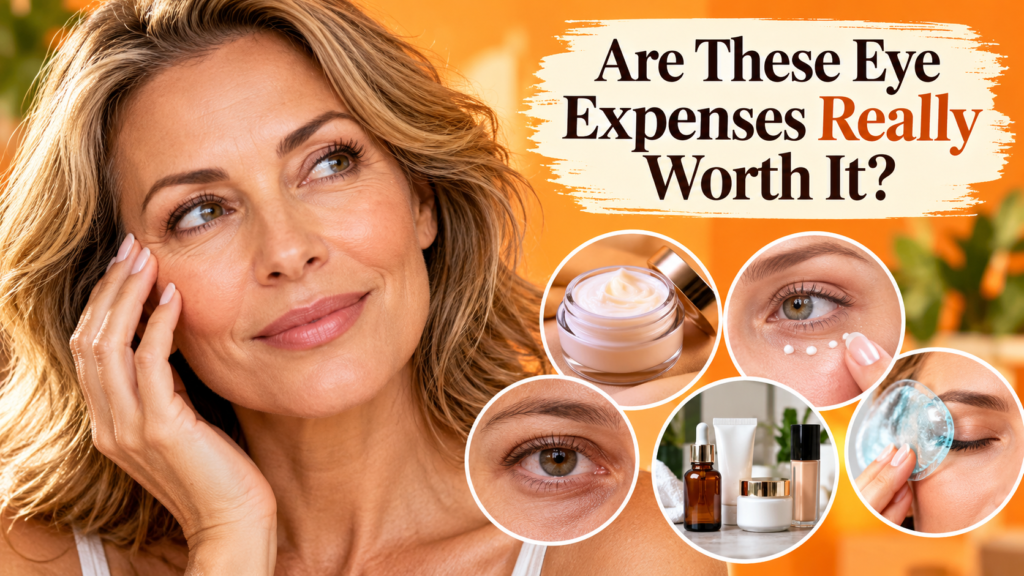
Have you ever looked in the mirror, noticed dark circles, puffiness or fine lines around your eyes, and wondered whether another expensive beauty product will actually make a difference? If your bathroom cabinet is filling up with eye creams, serums and treatments but your eyes still look tired, it might be time to rethink where your beauty budget is going.
The skin around your eyes is delicate, and its appearance can change for several reasons, including ageing, dehydration, sleep quality and genetics. While the right products can help support healthy-looking skin, buying more does not automatically mean getting better results.
Before spending money on another eye care product, consider these six expenses worth reviewing. A few thoughtful changes could help you simplify your routine, avoid unnecessary purchases and make more informed decisions about caring for your skin.
1. Expensive Eye Creams That Promise Too Much
Eye creams are often marketed as essential purchases for anyone concerned about dark circles, puffiness and wrinkles. Some contain useful ingredients, but a higher price does not necessarily mean a better product.
The most important question is whether the formula addresses your particular concern.
For example, moisturising ingredients can help reduce the appearance of dryness and make fine lines look less noticeable. Products containing ingredients such as hyaluronic acid, glycerin or ceramides may help improve skin hydration.
However, no eye cream can eliminate every cause of dark circles or reverse all the visible effects of ageing.
Before buying another cream, review the ingredients, consider what you already own and give suitable products enough time to show whether they help. Spending less on a well-formulated product may be more sensible than repeatedly switching between expensive alternatives.

2. Multiple Serums With Overlapping Ingredients
Using several skincare serums can feel like a way to give your skin extra attention. Yet purchasing multiple products with similar ingredients may add unnecessary expense without providing additional benefits.
For instance, you might already have a hydrating serum, a moisturiser and an eye cream that all target dryness. Adding another product with essentially the same purpose may not meaningfully improve your results.
A more practical approach is to identify your main concerns before shopping.
- For dehydration, look for effective moisturising ingredients.
- For uneven skin tone, consider products formulated to address pigmentation.
- For visible signs of ageing, explore ingredients suited to your skin type and tolerance.
Keep your routine manageable and introduce new products gradually. This makes it easier to understand what works for your skin and reduces the likelihood of irritation from combining too many active ingredients.
3. Anti-Ageing Treatments That Ignore Collagen Loss
Fine lines around the eyes can become more noticeable with age. One reason is the gradual decline in collagen, a structural protein that helps give skin its firmness and support.
As collagen levels change, skin may gradually lose some of its elasticity and appear thinner or less resilient. Sun exposure, smoking and other lifestyle factors can contribute to visible skin ageing.
This can encourage people to spend heavily on treatments that promise firmer, smoother-looking skin.
Before investing in another anti-ageing product, consider whether your expectations are realistic. Moisturisers can improve hydration and temporarily soften the appearance of fine lines, while certain skincare ingredients may help improve the appearance of ageing skin over time. Results vary, and no single product can completely stop the ageing process.
Daily sun protection is also important. Protecting the delicate eye area from excessive ultraviolet exposure can help reduce additional skin damage and support a more consistent long-term skincare routine.

4. Concealers and Colour Correctors That Keep Adding Up
Makeup can be useful for disguising dark circles, uneven pigmentation and a tired appearance. However, repeatedly purchasing different concealers and colour correctors can become an expensive habit.
The challenge is that dark circles do not always have the same cause.
Some are associated with pigmentation, while others result from visible blood vessels beneath thin skin. Genetics, shadows created by facial structure and age-related changes can also influence how dark the under-eye area appears.
A concealer that works beautifully for one person may not work as well for another.
Before buying another shade or formula, check whether your existing products are suitable for your skin tone and undertone. Proper hydration around the eyes may also help prevent makeup from settling into dry areas and making fine lines more noticeable.
Remember that makeup can disguise certain concerns, but it cannot necessarily address their underlying causes.
5. Products That Promise to Eliminate Puffiness Overnight
Puffy eyes can make you look exhausted, even after a reasonable night’s sleep. It is understandable to be tempted by products promising an immediate transformation.
However, under-eye puffiness can have several causes, including fluid retention, allergies, insufficient sleep and the natural changes that occur with ageing.
Some simple habits may help reduce its appearance without requiring another expensive purchase.
Try these practical measures:
- Get consistent, adequate sleep whenever possible.
- Consider whether excess salt intake contributes to morning puffiness.
- Use a clean, cool compress for temporary relief.
- Avoid rubbing the delicate skin around your eyes.
- If allergies are responsible, address the underlying trigger where possible.
Persistent or sudden swelling, particularly when accompanied by pain or changes in vision, deserves medical attention.
Rather than continually buying products that promise overnight results, first consider what might be contributing to the problem. Understanding the cause can help you choose a more appropriate solution.
6. Collagen Beauty Supplements Without a Clear Routine
Collagen supplements have attracted attention among people looking to support skin hydration, elasticity and a youthful-looking appearance. However, not every supplement is the same, and results should never be assumed or guaranteed.
Research into oral collagen peptides suggests that some formulations may offer modest improvements in certain measures of skin hydration and elasticity. Nevertheless, the evidence varies, and individual results depend on several factors.
If you are considering a collagen supplement, review its ingredients, serving instructions, cost per serving and suitability for your circumstances. Be cautious of products promising to erase wrinkles, eliminate dark circles or restore youthful skin completely.
Kollagen Intensiv is one option that people may encounter when exploring collagen-focused beauty products. It may be worth considering as part of a broader beauty routine, provided you assess its current ingredient information, product claims and cost before making a decision.
The important point is to avoid treating any supplement as a guaranteed solution. A collagen-focused product should complement sensible skincare and lifestyle habits rather than replace them.

Why Kollagen Intensiv May Be Worth Considering in Your Beauty Routine
If your main concerns are tired-looking eyes, fine lines and changes in skin firmness, it helps to take a broader view of your beauty routine.
Kollagen Intensiv may appeal to someone exploring products positioned around the visible signs of skin ageing. However, it is important to distinguish between a product’s intended purpose and benefits that have been independently established for its specific formulation.
Before committing to an ongoing expense, consider whether the product fits your budget, whether its ingredients are clearly disclosed and whether its claims are supported by credible evidence.
It is also worth remembering that collagen loss is only one part of the ageing process. Hydration, sun exposure, sleep, genetics and overall skincare habits all influence how the eye area looks.
You do not necessarily need a long list of specialised products. A gentle cleanser, suitable moisturiser, daily sun protection and targeted products chosen for your individual needs can provide a sensible foundation.
Make Your Eye Care Budget Work Smarter
Caring for the skin around your eyes does not have to mean buying every new cream, serum or supplement that catches your attention.
The best place to start is by identifying what concerns you most, understanding the possible causes and reviewing whether your current products genuinely meet those needs.
Some expenses may be worth keeping, while others can be reduced or eliminated. Prioritising hydration, sun protection, consistent sleep and realistic expectations can help you build a more sustainable approach to skincare.
Whether you are considering Kollagen Intensiv, replacing an eye cream or simplifying your existing routine, take the time to evaluate your options before spending again.
Healthy-looking skin is supported by consistent care and informed choices, not simply by the number of products on your bathroom shelf.
Looking for more eye-care tips? Subscribe for practical advice on keeping
your eyes looking fresh and healthy.