
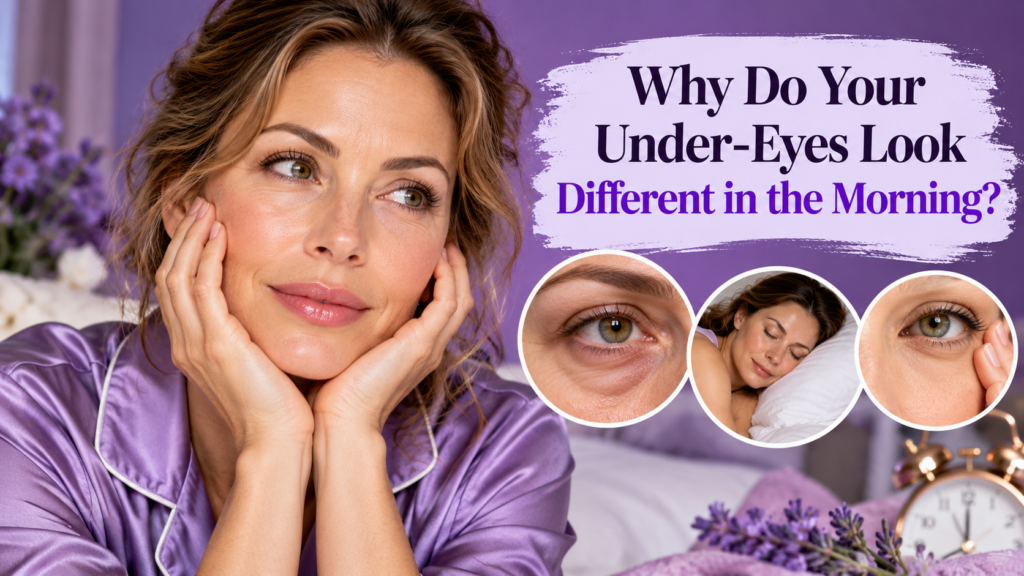
Have you ever looked in the mirror after waking up and wondered why your under-eyes suddenly look puffier, darker, or more lined than they did the night before? You may have gone to bed feeling fine, only to wake up with tired-looking eyes that make you appear older or less rested than you feel.
The good news is that morning under-eye changes are common, and they do not always mean your skin is ageing faster. Several everyday factors can influence the delicate skin around your eyes, from fluid retention and sleep quality to hydration and the gradual loss of skin elasticity.
Understanding what causes these changes can help you build a more effective skincare routine and make informed choices about maintaining a fresher, healthier-looking appearance.
1. Fluid Retention Can Cause Morning Puffiness
One of the most common reasons your under-eyes look different in the morning is temporary fluid retention.
While you sleep horizontally, fluid can collect around the delicate tissues beneath your eyes. Because the skin in this area is particularly thin, even a small amount of swelling may be noticeable when you wake up.
You might notice soft puffiness, slightly swollen eyelids, or a heavier appearance around your eyes.
Several factors can contribute to this effect, including eating a salty meal the previous evening, hormonal fluctuations, allergies, and changes in your usual sleeping routine.
What may help: Try keeping your evening meals balanced, drinking enough water throughout the day, and gently applying a cool compress to your closed eyes in the morning. Avoid rubbing or pulling at the delicate skin.
Morning puffiness often improves naturally as you become more upright and move through your day.

2. Poor Sleep Can Make Dark Circles More Noticeable
Your eyes can reveal the effects of a restless night surprisingly quickly.
When you do not get enough quality sleep, your complexion may appear dull, and the blood vessels beneath your thin under-eye skin can become more noticeable. This can make existing dark circles stand out.
Lack of sleep may also contribute to puffiness, making the area beneath your eyes look heavier and less refreshed.
However, dark circles are not always caused by poor sleep. Genetics, natural pigmentation, allergies, and facial structure can also influence their appearance.
What may help: Aim for a consistent sleep schedule and create a relaxing bedtime routine. Reducing late-night screen use, keeping your bedroom comfortable, and allowing sufficient time for rest may help you wake up looking more refreshed.
Although good sleep cannot eliminate every dark circle, it can reduce some of the factors that make tired-looking eyes more noticeable.
3. Dehydration Can Make Fine Lines Stand Out
Have you noticed that the fine lines beneath your eyes sometimes appear deeper in the morning?
One possible explanation is reduced skin hydration.
When the skin lacks moisture, its surface can look less smooth, and small lines may become more visible. The under-eye area is especially susceptible because its skin is naturally thinner and has fewer oil-producing glands than many other parts of the face.
Dehydration is not the only cause of under-eye lines, but inadequate fluid intake and dry environmental conditions can contribute to a less supple appearance.
What may help: Drink water regularly throughout the day and use a gentle moisturiser formulated for the eye area. Ingredients such as hyaluronic acid and glycerin can help attract and retain moisture in the skin.
Remember that moisturising can temporarily soften the appearance of dehydration-related lines, but it does not permanently remove wrinkles.

4. Natural Collagen Loss Can Affect Under-Eye Elasticity
Collagen plays an important role in maintaining the skin’s structure and firmness. As we age, the body gradually produces less collagen, and existing collagen fibres undergo changes.
Over time, this can contribute to thinner-looking skin, reduced elasticity, and more noticeable fine lines around the eyes.
When the skin beneath your eyes becomes less firm, underlying blood vessels and natural shadows may become more apparent. This can create the impression of deeper dark circles or a more tired appearance.
Unlike temporary fluid retention, age-related changes in collagen and skin structure do not disappear simply because you have been awake for a few hours.
What may help: Protect your skin from excessive sun exposure, use moisturising skincare, and consider a broad-spectrum sunscreen suitable for the eye area. These habits can help support the skin’s appearance over time.
Collagen supplements are another option some people explore as part of a broader beauty routine, although their effects vary and they cannot fully reverse natural ageing.
5. Your Sleeping Position May Influence Under-Eye Swelling
The way you sleep can sometimes affect how your face looks when you wake up.
Lying flat for several hours may encourage fluid to collect around the eyes. If you regularly wake up with puffiness that gradually settles during the morning, your sleeping position could be one factor worth considering.
Sleeping face-down or pressing your face into a pillow may also temporarily affect the appearance of your skin.
These changes are generally different from permanent under-eye bags, which can develop through ageing, genetics, and changes in the tissues supporting the eye area.
What may help: If comfortable, try sleeping on your back with your head slightly elevated. A supportive pillow may help reduce overnight fluid accumulation for some people.
You do not need to change your sleeping position if doing so makes it difficult to rest comfortably. Consistent, good-quality sleep remains the priority.

6. Allergies and Irritation Can Make Your Eyes Look Tired
Sometimes, morning under-eye changes have less to do with ageing and more to do with irritation.
Dust mites, pollen, pet dander, and other allergens can trigger symptoms such as watery eyes, itching, swelling, and dark circles. Rubbing your eyes repeatedly may make the surrounding skin more irritated and swollen.
People with sensitive skin may also experience irritation from fragranced products, makeup, or skincare ingredients that are not suitable for them.
What may help: Identify potential triggers, avoid rubbing your eyes, and use gentle, fragrance-free skincare if your skin is easily irritated. If allergy symptoms are persistent, a healthcare professional can help you identify appropriate treatment options.
If swelling is sudden, painful, affects only one eye, or comes with vision changes, seek medical advice promptly rather than assuming it is ordinary morning puffiness.
7. Your Evening Skincare and Daily Habits Can Affect Your Morning Appearance
Your under-eye appearance is influenced by more than what happens while you sleep. Your daily habits and evening skincare routine can also make a difference.
For example, alcohol may contribute to dehydration and disrupted sleep, while a high-sodium dinner can encourage temporary fluid retention in some people. Inadequate moisturising may also leave the skin feeling dry and make fine lines more noticeable.
Harsh cleansers, excessive exfoliation, and sleeping in makeup can irritate the skin, particularly around the eyes.
A simple routine is often more helpful than adding numerous products.
Consider these everyday habits:
- Remove makeup gently before bed.
- Use a moisturiser suited to your skin type.
- Eat a balanced diet with adequate protein and a variety of nutrient-rich foods.
- Limit habits that interfere with sleep quality.
- Wear sun protection consistently.
- Give new skincare products time to show whether they suit your skin.
Small, sustainable changes can help support healthier-looking skin without requiring an expensive or complicated routine.

Could Kollagen Intensiv Be Part of Your Beauty Routine?
If your main concern is gradually changing skin texture, reduced firmness, or the appearance of fine lines, you may be interested in beauty products designed to complement your existing skincare habits.
Kollagen Intensiv is marketed as an anti-ageing beauty product for people seeking to improve the appearance of ageing skin. It may be an option to investigate if you are looking for an additional step in your overall beauty routine.
However, it is important to distinguish between products applied to the skin and collagen supplements taken orally. Their ingredients, mechanisms, and supporting evidence can differ considerably. The benefits of any particular product depend on its formulation and the quality of the evidence behind it.
No beauty product can guarantee the removal of dark circles, eliminate morning puffiness, or restore the skin to its appearance from years earlier.
Before choosing Kollagen Intensiv, review its ingredient list, intended use, and available evidence. Consider whether it suits your skin type and existing routine, and be cautious of promises of dramatic or guaranteed results.
The most useful approach is to treat a beauty product as one possible part of a broader strategy that includes sleep, hydration, sun protection, balanced nutrition, and appropriate skincare.
Final Thoughts
If your under-eyes look different every morning, there may be several explanations. Temporary fluid retention, insufficient sleep, dehydration, allergies, and everyday habits can all influence puffiness, dark circles, and the visibility of fine lines.
Natural collagen loss also plays a role in how the delicate skin around your eyes changes over time.
Rather than assuming every morning change is a sign of ageing, pay attention to patterns. Notice whether puffiness settles during the day, whether certain foods or products make a difference, and whether your sleep routine affects your appearance.
With consistent skincare and realistic expectations, you can take practical steps to support smoother, healthier-looking skin. The goal is not to eliminate every line or shadow but to understand what your skin needs and help it look its best at every stage of life.
Looking for more eye-care tips? Subscribe for practical advice on keeping
your eyes looking fresh and healthy.