
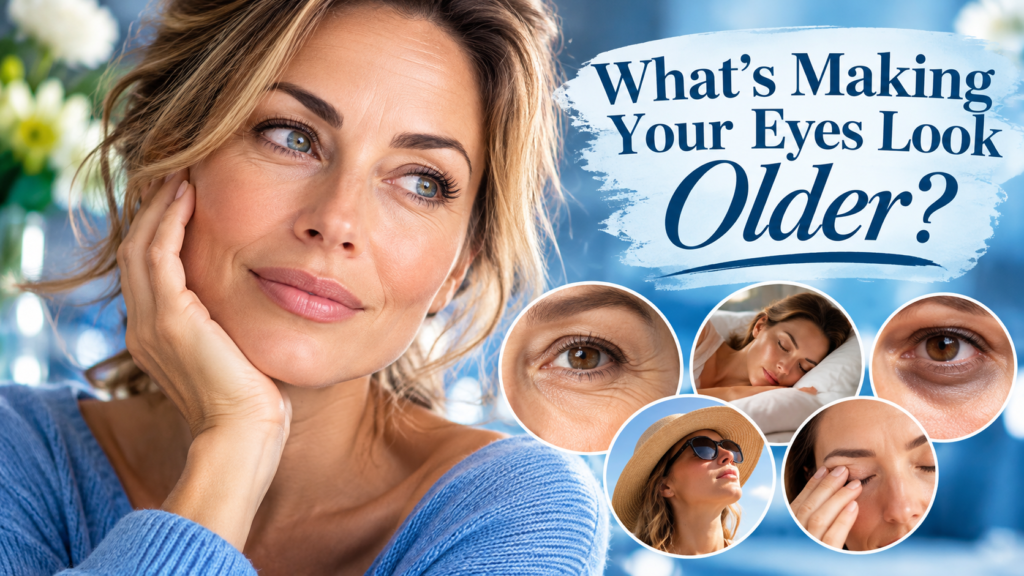
Have you ever looked in the mirror and felt like your eyes make you look more tired or older than you actually feel? The eye area can change noticeably over time, and sometimes it is not just about wrinkles. Dark circles, puffiness, dryness, fine lines, and a loss of firmness can all contribute to an aged or fatigued appearance.
The skin around the eyes is particularly delicate, which means everyday habits and the natural ageing process can become visible there sooner than elsewhere on the face. Understanding what may be contributing to these changes can help you make more informed choices about your skincare and overall beauty routine.
Here are 10 common factors that can make the eye area look older.
1. Natural Collagen Loss
Collagen is an important structural protein that helps give skin its firmness and support. As we age, the body naturally produces less collagen.
This gradual decline can contribute to changes such as fine lines, reduced firmness, and a less smooth appearance around the eyes.
Because the skin in this area is thin, even subtle changes in its structure can become noticeable.

2. Dehydrated Skin
Dry or dehydrated skin can make fine lines appear more pronounced.
When the skin lacks sufficient moisture, its surface may look less smooth and supple. Around the eyes, this can make tiny creases and texture more noticeable, particularly when smiling or moving the face.
Maintaining good skin hydration can help the eye area look smoother and more comfortable.
3. Too Much Sun Exposure
Sun exposure is one of the major environmental factors associated with premature visible skin ageing.
Repeated exposure to ultraviolet radiation can contribute to changes in skin texture, uneven pigmentation, and loss of elasticity over time.
Protecting the delicate eye area with appropriate sun protection, sunglasses, and sensible sun habits can be an important part of an overall anti-ageing skincare routine.
4. Not Getting Enough Sleep
A lack of quality sleep can make the eyes appear tired even when the underlying cause is temporary.
After a poor night’s sleep, some people notice increased puffiness, darker-looking areas beneath the eyes, or a generally fatigued appearance.
ageing,While improving sleep cannot stop natural skin aging, consistently getting adequate rest can support a healthier-looking complexion and reduce the appearance of tiredness.
5. Repeated Facial Expressions
Smiling, squinting, concentrating, and other repeated facial movements naturally cause the skin around the eyes to fold.
Over many years, repeated movement can contribute to expression lines becoming more visible.
ageingThis does not mean you should stop smiling or showing emotion. Instead, it is simply another reason why fine lines around the eyes are a normal part of the aging process.
6. Rubbing Your Eyes
Rubbing or pulling at the delicate skin around the eyes can place unnecessary mechanical stress on the area.
This can happen when you’re tired, dealing with irritation, or simply have developed the habit of touching your eyes frequently.
minimiseBeing gentler when removing makeup or applying skincare can help minimize unnecessary pulling and friction.

7. Changes in Skin Elasticity
Youthful-looking skin is supported not only by collagen but also by its overall elasticity and structure.
As skin ages, it can gradually become less resilient and lose some of its ability to bounce back. Around the eyes, this may contribute to a softer, less firm appearance and make existing lines more noticeable.
Supporting the skin with consistent skincare and healthy lifestyle habits becomes increasingly important as these natural changes occur.
8. Lifestyle Habits
Your everyday lifestyle can influence how fresh or tired your skin appears.
Factors such as stress, smoking, excessive alcohol consumption, poor nutrition, inadequate sleep, and a lack of physical activity can all affect overall skin health.
A beauty routine is only one piece of the picture. Looking after your skin from multiple angles can make your approach more sustainable.
Simple habits can include:
- Eating a varied, nutrient-rich diet
- Drinking enough fluids
- Getting regular physical activity
- PrioritisingPrioritizing quality sleep
- Managing everyday stress
- Protecting your skin from excessive sun exposure

9. Neglecting the Eye Area in Your Skincare Routine
It is easy to focus on the cheeks, forehead, or other parts of the face while giving little attention to the eye area.
However, the delicate skin around the eyes can benefit from a consistent and gentle skincare routine.
MoisturisingMoisturizing appropriately and avoiding harsh products or excessive rubbing can help maintain a smoother-looking appearance.
Consistency is generally more useful than constantly switching between products.
Ageing10. The Natural Aging Process
Perhaps the most important factor to remember is that ageing itself is completely normal.
Over time, changes in collagen production, hydration, skin thickness, elasticity, and facial structure can all influence how the eye area looks.
No skincare product can permanently stop these natural processes. However, understanding them can help you choose realistic ways to support your skin as it changes.

Where Kollagen Intensiv May Fit Into Your Beauty Routine
For people concerned about visible signs of skin ageing, collagen-focused beauty products can be one option to consider alongside a broader skincare routine.
Kollagen Intensiv is formulated as a collagen-focused beauty product and may appeal to people looking to make collagen support part of their regular beauty approach.
It is important to keep expectations realistic. Individual results can vary, and no product should be viewed as a guaranteed way to remove wrinkles, dark circles, or puffiness.
Instead, someone might consider Kollagen Intensiv as one component of a broader routine that also includes good hydration, balanced nutrition, sun protection, adequate sleep, and gentle skincare.
Taking this wider approach makes more sense than relying on a single product to address every change associated with ageing skin.
A More Realistic Approach to Younger-Looking Eyes
The appearance of the eye area is influenced by many different factors. Some, such as natural ageing and genetics, cannot simply be switched off. Others, including sun exposure, dehydration, sleep habits, and skincare practices, may be easier to address.
If your eyes have started looking more tired, dry, puffy, or lined, it does not necessarily mean you need an elaborate routine. Small, consistent improvements can be more practical than constantly searching for a quick fix.
Supporting your skin’s hydration, protecting it from environmental stress, maintaining healthy lifestyle habits, and considering products designed to complement your beauty routine can all form part of a sensible approach.
The goal is not to stop ageing. It is to take better care of your skin as it naturally changes—and to help your eye area look as healthy, refreshed, and well cared for as possible.
Don’t stop here. Subscribe for more practical tips on keeping your eyes looking
their best as you age.