
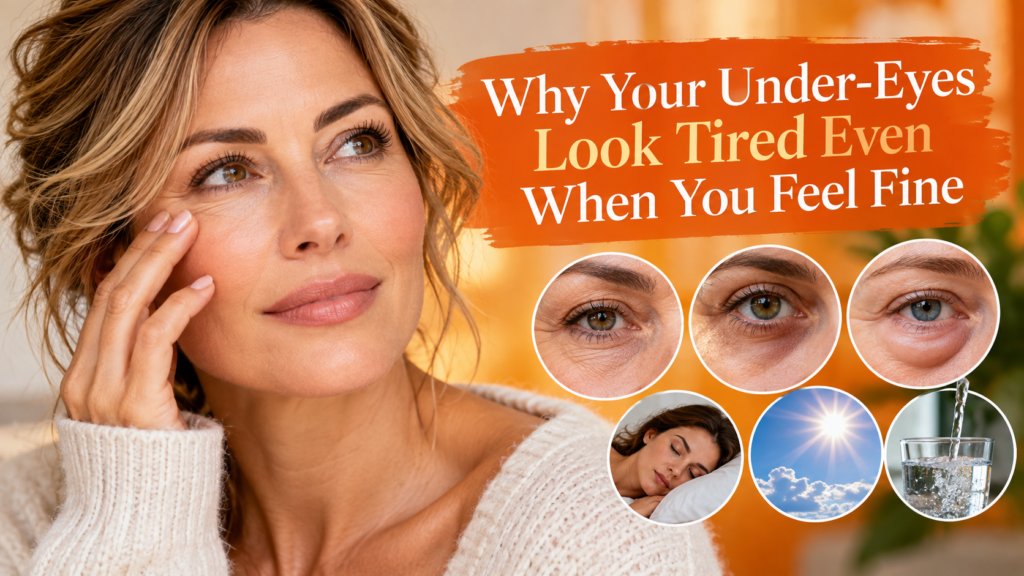
Your eyes can make you look tired even when you feel completely rested. Dark circles, puffiness, fine lines and a crepey-looking under-eye area can seem to appear overnight—but there is usually more going on beneath the surface.
The skin underneath your eyes is particularly delicate, so changes in hydration, sleep, lifestyle and the natural ageing process can become noticeable here first. If you’re wondering why your under-eyes don’t look as fresh as they once did, these nine factors are worth understanding.
1. Natural Collagen Loss
Collagen is one of the proteins that helps give skin its structure, firmness and resilience. As we age, the body’s natural production of collagen gradually declines.
This can contribute to changes in the appearance of the skin, including reduced firmness and more noticeable fine lines. Because the under-eye area has very thin skin, these changes may become easier to see.
Collagen loss is a normal part of ageing, but factors such as sun exposure and lifestyle can also influence how skin looks over time.

2. Dehydrated Skin
Sometimes under-eye lines appear more noticeable simply because the skin is lacking moisture.
When skin becomes dehydrated, it can look less smooth and supple. Fine lines may appear more pronounced, and the overall area can take on a dull or tired appearance.
Keeping your body adequately hydrated and using skincare suited to your skin type can help support a healthier-looking complexion.
Hydration doesn’t stop the natural ageing process, but maintaining moisture is an important part of keeping skin looking comfortable and refreshed.
3. Lack Of Sleep
A poor night’s sleep can quickly show around your eyes.
When you’re tired, your eyes may appear heavier, puffier or darker than usual. Sleep deprivation can also make an already tired-looking complexion appear more noticeable.
Occasional late nights are unlikely to transform your skin, but consistently getting insufficient sleep can work against the fresh, rested appearance many people want.
A regular sleep routine can therefore be just as important to your overall beauty routine as the products you apply.
4. Sun Exposure
Your skin receives UV exposure every time you spend time outdoors, and cumulative sun exposure can contribute to visible skin ageing.
UV exposure can affect collagen and elastin in the skin while also contributing to changes in pigmentation and texture.
Because the skin around the eyes is so delicate, protecting this area from excessive sun exposure is particularly important.
A broad-spectrum sunscreen appropriate for the face, sunglasses and sensible sun protection can all form part of a long-term approach to maintaining healthier-looking skin.

5. Genetics and Natural Facial Structure
Not every under-eye concern is caused by something you are doing.
Genetics can influence skin thickness, pigmentation, facial structure and the way shadows naturally fall beneath the eyes. Some people may therefore have noticeable dark circles or hollows even when they sleep well and follow an excellent skincare routine.
Understanding this can be helpful because it sets realistic expectations. Not every visible feature around the eyes can be completely changed through skincare or lifestyle adjustments.
6. Puffiness and Fluid Retention
Puffy eyes can make the entire face appear more tired.
Temporary puffiness can be influenced by factors such as sleep patterns, dietary habits, allergies, crying or simply the way fluid distributes around the eyes.
Some people notice that their under-eye area looks puffier in the morning and gradually settles throughout the day.
Gentle skincare, adequate sleep and avoiding rubbing the delicate eye area can all be sensible parts of an everyday routine.

7. Repeated Facial Movements
Your face is constantly moving. Smiling, squinting, laughing and other everyday expressions create repeated movement around the eyes.
Over many years, repeated facial movement combined with the natural reduction in skin elasticity can contribute to the appearance of expression lines.
This doesn’t mean you should stop smiling. Facial movement is completely normal. It simply helps explain why fine lines around the eyes can gradually become more visible with age.
8. Everyday Lifestyle Habits
Your overall lifestyle can influence how your skin looks.
Smoking, excessive alcohol consumption, poor nutrition, chronic stress and inadequate sleep can all work against a healthy-looking complexion.
On the other hand, habits such as eating a varied diet, staying active, getting adequate rest and avoiding smoking can support general health and help you maintain your skin’s appearance as you age.
Your under-eyes are not isolated from the rest of your body. What you do consistently can matter more than any single skincare product.

9. Your Overall Approach to Skin Ageing
One of the biggest mistakes people make is treating every visible under-eye concern as though it has one simple cause.
Dark circles, puffiness, fine lines and loss of firmness can have different contributing factors. That’s why a broader approach often makes more sense than searching for one miracle solution.
A well-rounded beauty routine might include:
- Daily sun protection
- Adequate hydration
- Consistent, quality sleep
- A balanced diet
- Gentle skincare
- Avoiding smoking
- Managing everyday stress
- Supporting the skin as it naturally ages
The goal isn’t to stop ageing. It’s to support your skin so it can continue to look as healthy and well cared for as possible.
Why Consider Kollagen Intensiv?
For people who are particularly interested in the appearance of ageing skin, collagen supplementation may be another option to consider as part of a broader beauty routine.
Kollagen Intensiv is designed around collagen as a beauty-focused supplement. Rather than viewing it as a replacement for sleep, hydration, sun protection or good skincare, it can be considered as one component of an overall approach to supporting the appearance of skin.
It’s important to keep expectations realistic. A collagen supplement isn’t an instant fix for dark circles, puffiness or under-eye wrinkles, and individual experiences can vary.
The most sensible approach is to think about collagen support alongside the everyday habits that already matter for maintaining healthy-looking skin.

Looking After Your Under-Eyes Over Time
Your under-eye area can reveal changes that are happening gradually throughout the ageing process. Collagen decline, reduced elasticity, dehydration, sun exposure, sleep and genetics can all play a role in how this delicate area looks.
That doesn’t mean tired-looking eyes are inevitable or that you need an elaborate routine.
Small, consistent habits can make a meaningful difference to how well you care for your skin over time. Protecting your skin from the sun, staying hydrated, getting enough rest and choosing products and supplements thoughtfully can all have a place in a sensible beauty routine.
Most importantly, remember that healthy-looking skin isn’t about looking younger at every stage of life. It’s about understanding what your skin needs and giving it consistent care as it changes.
Keep your eyes looking their best. Subscribe for more practical tips on eye
care and aging.