
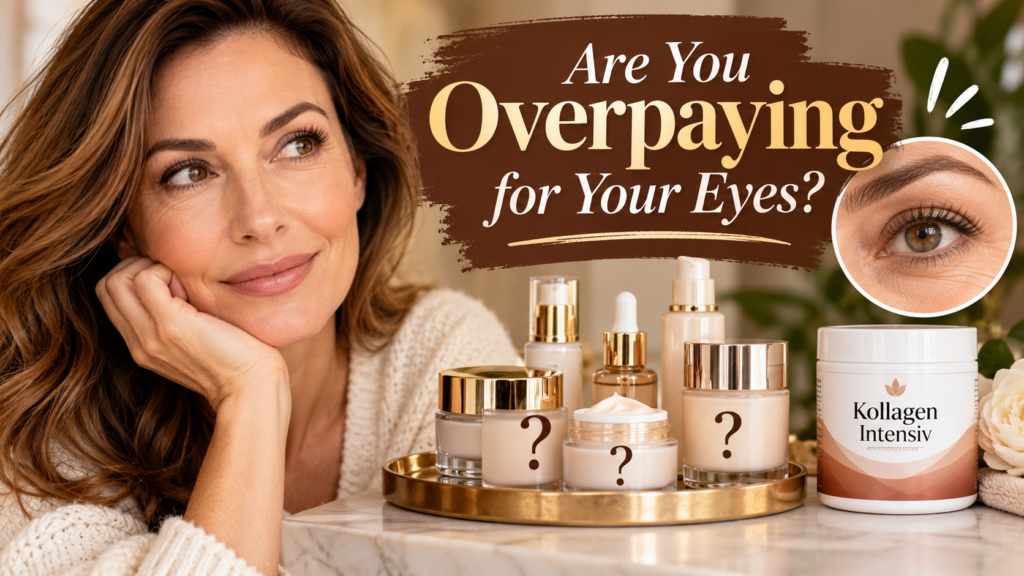
If your eyes constantly look tired, puffy, or older than you feel, it is easy to assume you need another expensive eye cream, serum, mask, or treatment. With so many products promising brighter, smoother, younger-looking eyes, your bathroom cabinet can quickly become crowded—and expensive.
But are all those products actually necessary?
The appearance of the eye area is influenced by much more than what you put directly underneath your eyes. Collagen levels naturally decline with age, skin becomes less elastic, hydration can decrease, and everyday factors such as poor sleep, sun exposure, stress, and dehydration can make the area look even more tired.
Before spending more money, it is worth looking at what your eyes may actually need.
1. Premium Eye Creams With a Long Ingredient List
Eye creams can be useful, particularly when they contain ingredients designed to support hydration or improve the appearance of fine lines. However, a higher price does not automatically mean better results.
Many expensive formulas contain combinations of moisturizing and skin-conditioning ingredients that can also be found in less expensive skincare products.
The delicate skin around the eyes often benefits from something surprisingly simple: consistent hydration and gentle care.
If your primary concern is dryness or fine lines that look more noticeable when the skin is dehydrated, improving your overall skincare routine may be more important than continually buying increasingly expensive eye creams.

2. Separate Products for Every Type of Eye Concern
Dark circles, puffiness, fine lines, dryness, and a tired appearance are often treated as completely separate problems.
That can encourage people to purchase several specialized products at once.
But the appearance of the eye area is interconnected with the condition of the surrounding skin. When skin becomes drier and loses some of its natural elasticity, fine lines can become more noticeable. Lifestyle factors can also make the eyes appear less refreshed.
Instead of automatically adding another product to your routine, consider whether your existing skincare, sleep, hydration, sun protection, and general habits are already addressing the basics.
3. Expensive Under-Eye Masks You Use Once in a While
Under-eye masks can feel refreshing, especially after a long day. They can temporarily make the skin look more hydrated and rested.
The problem is that they are often treated as a long-term solution when they are primarily a short-term addition to a beauty routine.
If you enjoy them, there is nothing wrong with using an eye mask occasionally. But spending heavily on disposable products may not be necessary if your main goal is maintaining healthy-looking, hydrated skin over time.
A consistent routine usually makes more sense than relying on occasional treatments.

4. Products That Promise to Transform Dark Circles Overnight
Dark circles can have many different causes.
Genetics, natural pigmentation, visible blood vessels, shadows created by facial structure, allergies, lack of sleep, and changes in the skin can all contribute to how dark the under-eye area appears.
That is why an expensive product promising dramatically brighter eyes overnight deserves a healthy dose of skepticism.
A skincare product may help improve hydration or the overall appearance of the skin, but there is no universal solution for every type of dark circle.
Understanding what may be contributing to your particular concern is a better starting point than simply buying the most expensive product on the shelf.

5. Products That Ignore the Bigger Picture of Skin Aging
One of the biggest mistakes in an eye-care routine is focusing exclusively on the surface of the skin.
As we age, the body’s natural production of collagen gradually declines. Collagen is an important structural protein that contributes to skin firmness and elasticity. Changes in collagen, combined with reduced moisture and other age-related changes, can contribute to the development and visibility of fine lines.
This does not mean an eye cream is useless. It simply means that skincare is only one part of the bigger picture.
Daily sun protection, adequate hydration, nutritious food, sufficient sleep, and avoiding smoking can all play a role in maintaining healthier-looking skin.
6. Every New “Anti-Aging” Product That Catches Your Attention
The beauty industry is constantly introducing something new.
One month it may be a revolutionary eye serum. The next month it may be a specialized peptide cream or an expensive overnight treatment.
Constantly switching products can make it difficult to determine what actually works for your skin.
Instead, consider building a simple routine around consistent habits:
- Gentle cleansing and moisturizing
- Daily sun protection
- Adequate water and nutritious food
- Consistent sleep
- Avoiding smoking
- Giving skincare products enough time to assess how your skin responds
Sometimes simplifying your routine can be more useful than continually adding to it.

What About Collagen and Aging Skin?
Collagen naturally becomes less abundant as we get older. This is one reason mature skin can gradually become less firm and elastic, while fine lines may become more visible.
Hydration also matters. When skin is dry, fine lines can appear more pronounced, and the complexion may look dull or tired.
This is where it can make sense to think beyond products applied directly around the eyes.
Some people choose to include a collagen supplement such as Kollagen Intensiv as part of their broader beauty routine. Rather than treating it as a replacement for skincare, it can be considered alongside everyday habits that support healthy-looking skin.
Kollagen Intensiv is formulated around collagen as a beauty-focused supplement. For someone interested in supporting their skin from within, it may be an option worth considering as part of a consistent routine.
However, expectations should remain realistic. A collagen supplement is not an overnight fix for dark circles, puffiness, wrinkles, or other signs of aging. Individual results can vary, and maintaining sensible skincare and lifestyle habits remains important.
A Better Way to Think About Your Eye-Care Routine
Your eyes do not necessarily need six different expensive products.
Instead of asking, “What should I buy next?” it may be more useful to ask:
What is actually causing my eyes to look tired?
If the problem is dryness, improving hydration may help. If lack of sleep is making your eyes look exhausted, another serum may not address the underlying issue. If sun exposure is contributing to visible skin aging, daily sun protection deserves attention.
And if your concern is the gradual loss of firmness and elasticity associated with aging, considering collagen as part of your overall beauty routine may be reasonable.
The goal is not to eliminate every line or completely change the way your face looks. It is to support your skin consistently and make informed choices about where your beauty budget goes.

The Bottom Line
Expensive eye-care products can be enjoyable, and some may provide useful skincare benefits. But a higher price tag does not automatically make a product essential.
Tired-looking eyes, dark circles, puffiness, and fine lines can be influenced by genetics, aging, hydration, sleep, sun exposure, and many other factors. That is why a thoughtful approach is often more useful than buying every new product marketed for younger-looking eyes.
A simple skincare routine, healthy lifestyle habits, sun protection, and attention to overall skin health can form the foundation. For those interested in supporting their beauty routine from within, a collagen supplement such as Kollagen Intensiv can also be considered as one part of that broader approach.
Sometimes, the smartest beauty purchase is not another product for your bathroom shelf—it is understanding what your skin actually needs.
Want more helpful eye-care advice? Subscribe for practical tips on caring for
your eyes over time.